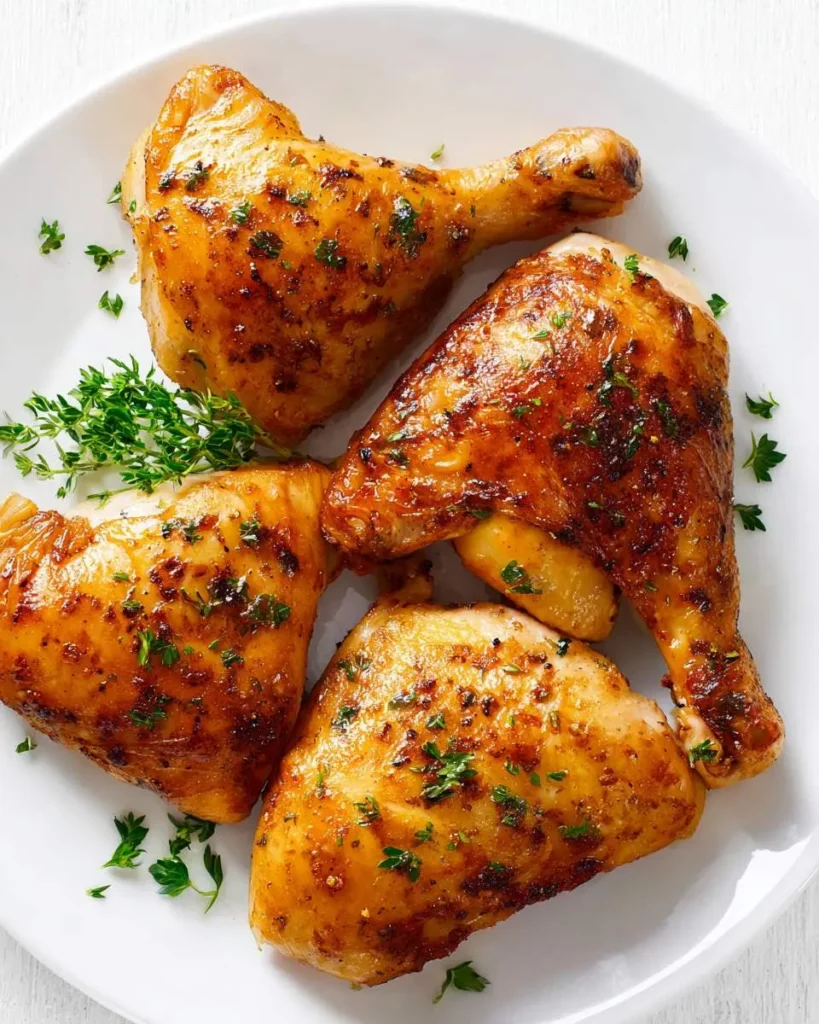
The smell of chicken fat rendering in a hot oven takes me straight back to my grandmother’s kitchen on Sunday afternoons. She never fussed with fancy cuts. A tray of baked chicken leg quarters, skin crackling and golden, was her love language. I did not understand it then. I do now.
Last month I found myself standing in front of my own oven at 5 PM on a Tuesday, bone-tired, with three hungry kids circling like sharks. I remembered her method. No marinade, no overnight prep, just salt, fat, and heat doing what they do best. Twenty minutes later the house smelled like home.
This is the recipe I wish I had written down years ago. It has become my rescue dinner, my comfort food, and honestly, the reason I stopped buying boneless breasts altogether. If you want something with more sophistication, my chicken and tarragon with morel mushrooms is worth the extra effort. But for pure satisfaction, keep reading.
Why Dark Meat and High Heat Change Everything
I used to think chicken legs were the budget option, the thing you bought when you could not afford breasts. I was wrong. The fat content in leg quarters keeps the meat juicy through any temperature swing, and the bone conducts heat to the center in a way that guarantees doneness without a thermometer. For baked chicken leg quarters, I reach for smoked paprika and garlic powder every time. The paprika builds that deep amber color we eat with our eyes first. The garlic powder avoids the bitter burn that fresh garlic suffers in a hot oven. A little melted butter or schmaltz rubbed under the skin creates a self-basting situation that makes the meat almost fall-apart tender. If you need a faster weeknight option, my chicken Caesar flatbread comes together in fifteen minutes flat.
How to Make Baked Chicken Leg Quarters
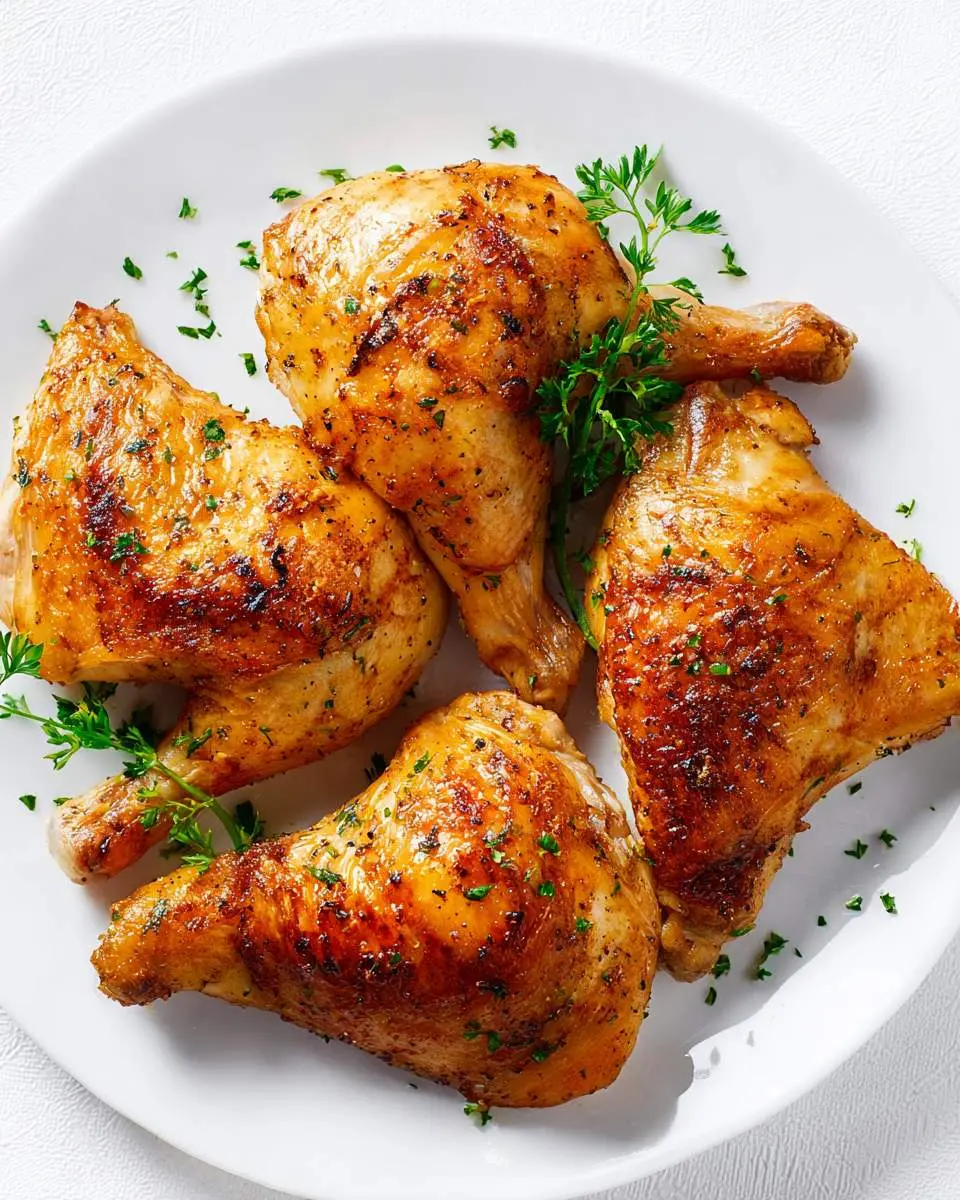
I start by patting the legs completely dry with paper towels. This is non-negotiable. Wet skin steams instead of crisps, and we are after that shattering texture. I loosen the skin from the meat with my fingers, working carefully so it does not tear, then slide seasoned butter underneath. The rest of the spice mixture goes on top, pressed firmly so it adheres.
The oven gets cranked to 425 degrees. I arrange the legs on a wire rack set inside a rimmed baking sheet. This elevation lets hot air circulate all around, and the drippings collect below where they cannot make the bottom soggy. About forty minutes in, the kitchen fills with this savory, almost nutty aroma that makes everyone wander in asking questions. I pull them when the skin sounds hollow when tapped and the juices run clear. Resting for ten minutes is torture but essential. The meat relaxes, the juices redistribute, and you avoid that disappointing flood on the cutting board. For another approach to roasting whole birds, my creamy garlic chicken uses similar techniques with a luscious sauce.
What I Learned After Ruining the Skin Three Times
My first attempt, I crowded the pan. The legs touched, trapped steam rose, and I ended with pale, flabby skin that no amount of broiling could save. Now I use two pans if needed and embrace the extra dishwashing.
I also learned that starting with cold meat straight from the refrigerator extends cooking time unpredictably. Thirty minutes on the counter makes the timing reliable and the texture better.
Brining is unnecessary here. The bone and fat do the work. Salt applied directly to the skin and given ten minutes to penetrate is plenty.
My Secret Trick: I save the rendered fat and drippings in a jar in my freezer. That schmaltz becomes the cooking fat for roasted potatoes the next night, and suddenly you have built a flavor legacy from one simple dinner.
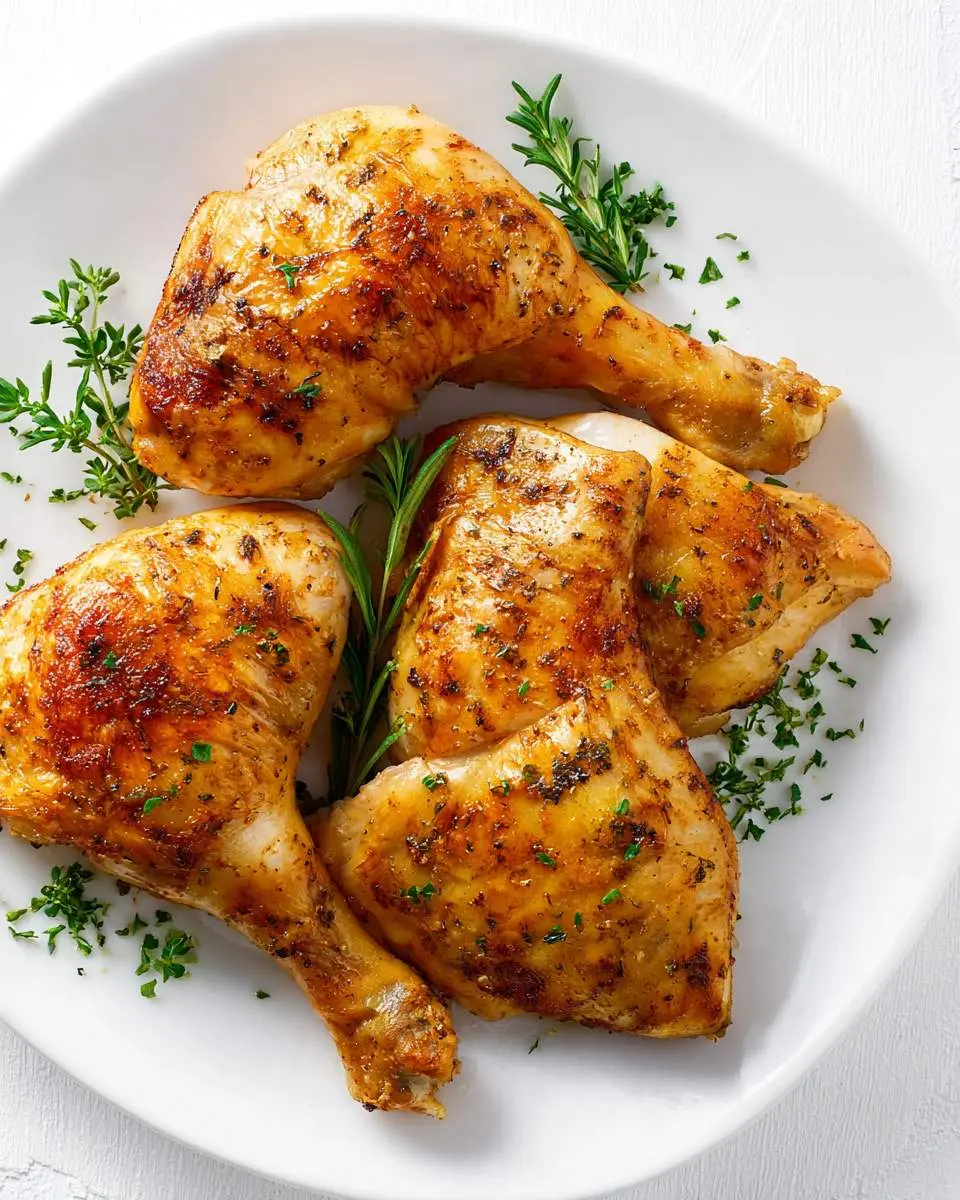
How to Store Baked Chicken Leg Quarters
- Refrigerate within two hours of cooking in an airtight container for up to four days
- Freeze individual portions wrapped tightly in foil then placed in freezer bags for up to three months
- Reheat in a 375 degree oven on a wire rack for fifteen to twenty minutes to restore crispness
- Avoid microwave reheating which destroys the texture you worked so hard to achieve
Why This Recipe Fits a Real Life
Baked chicken leg quarters deliver serious protein without the premium price tag of leaner cuts. The skin-on, bone-in approach means you get collagen and minerals that boneless options simply cannot match. I find one leg quarter fills me up longer than a double portion of white meat ever did. The high-heat roasting method also means less added fat overall compared to frying or sautéing. It is honest food that respects your budget and your body.

FAQs
Do I need to flip the chicken while it bakes?
No, and please do not open that oven door. The wire rack position allows even heat circulation, and flipping risks tearing the skin. Trust the method and let the oven do its job undisturbed.
Why is my chicken skin not getting crispy?
Almost always this comes down to moisture. Pat the legs aggressively dry before seasoning, use a wire rack for air flow, and verify your oven actually reaches the temperature it claims. A cheap oven thermometer reveals surprising truths.
Can I use chicken thighs instead of leg quarters?
Absolutely, though timing shortens slightly. Thighs contain less total mass so check for doneness around the thirty-five minute mark. The same principles of dry skin and high heat apply perfectly.
What temperature should baked chicken leg quarters reach?
The safe internal temperature is 165 degrees at the thickest part near the bone. I pull mine at 160 and let carryover cooking finish the job during the rest period. This prevents the stringy overcooked texture nobody wants.
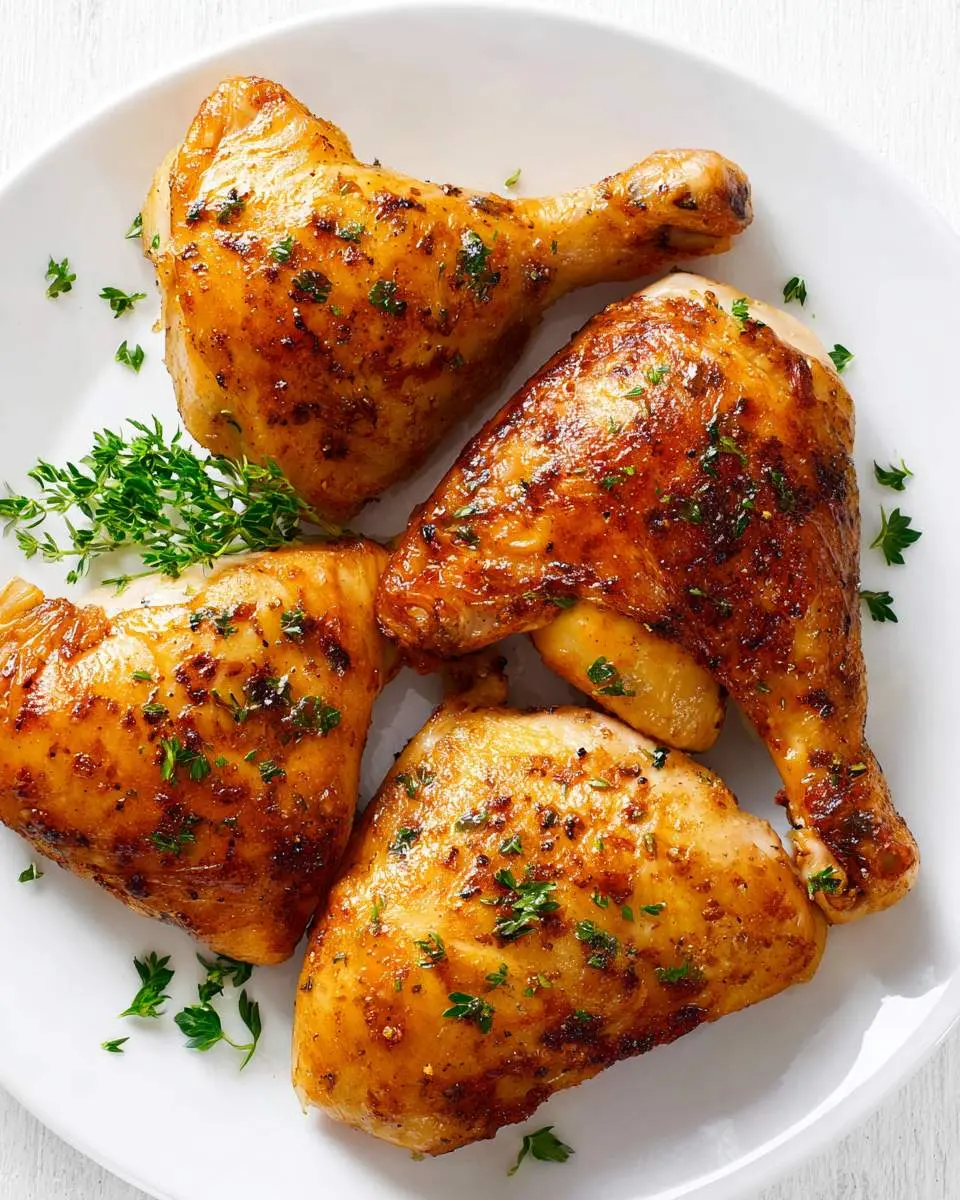

Baked Chicken Leg Quarters
Ingredients
Equipment
Method
Notes
Conclusion
I hope you make these baked chicken leg quarters this week and find the same relief I did. Simple techniques, honest ingredients, and a little patience transform the humblest cut into something worth gathering around. For your next roast dinner, my garlic herb roast chicken builds on everything you learned here.
Follow us on Social Media : Pinterest