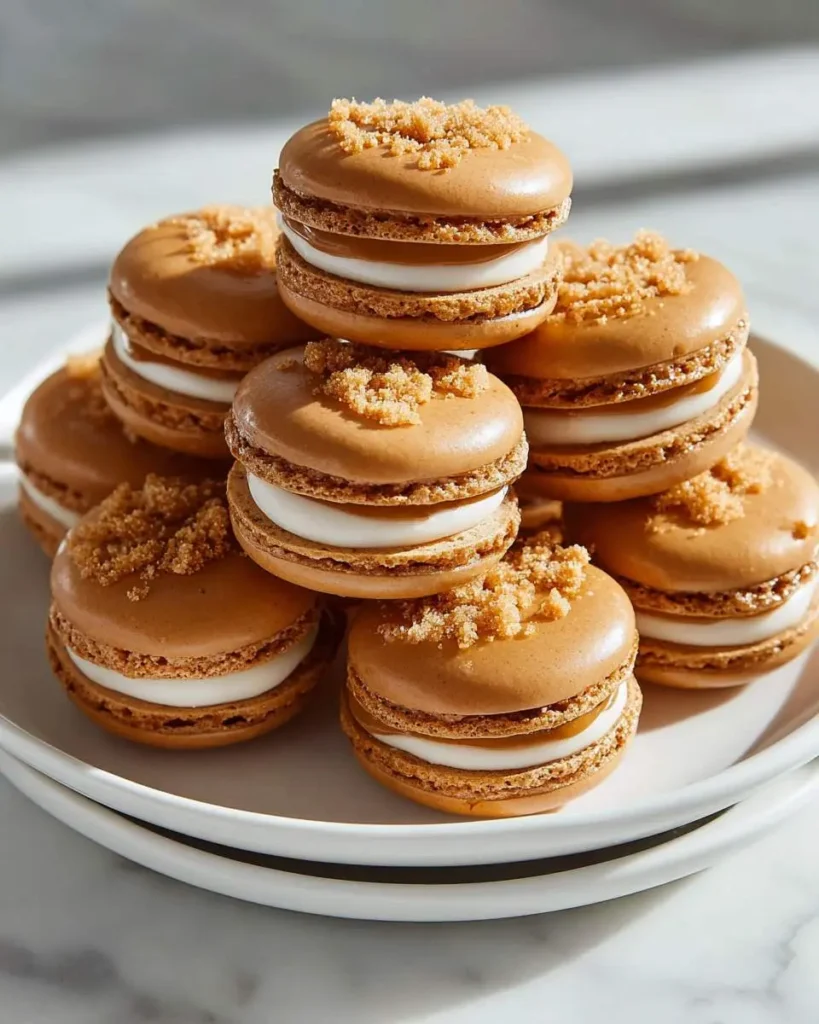
The first time I cracked open a jar of Biscoff cookie butter, I ate half of it with a spoon standing at my kitchen counter. That caramelized, slightly spiced sweetness haunted me for days. I knew I had to trap that flavor inside something delicate, something that would make people close their eyes when they took a bite. Biscoff Cookie Butter Macarons became my obsession.
My grandmother kept a tin of speculoos cookies in her pantry that she only brought out for special occasions. I would sneak them when she wasn’t looking, crumbly and fragrant with cinnamon. These macarons taste like that memory, like being trusted with something precious.
French macarons intimidated me for years until I stopped treating them like a chemistry experiment and started listening to what the batter was telling me. If you are new to macarons, my almond flour chocolate chip cookies are a gentler introduction to working with nut flours.
The Ingredients That Make These Macarons Sing
Almond flour is non-negotiable here, and I insist on blanched, super-fine grind. The specks of skin in unblanched flour create dark spots on those perfect shells, and we are after that smooth, pale canvas. Egg whites must be aged, left uncovered in the fridge for 24 to 48 hours, which sounds fussy until you see how much more stable your meringue becomes. The real star, of course, is the Biscoff spread itself, whipped into a buttercream that tastes like someone distilled autumn into a jar. I have tried other cookie butters, and they simply do not carry that same depth of caramelized spice. For another seasonal cookie that leans into warm spices, my chewy pumpkin cookies hit a similar comfort note.
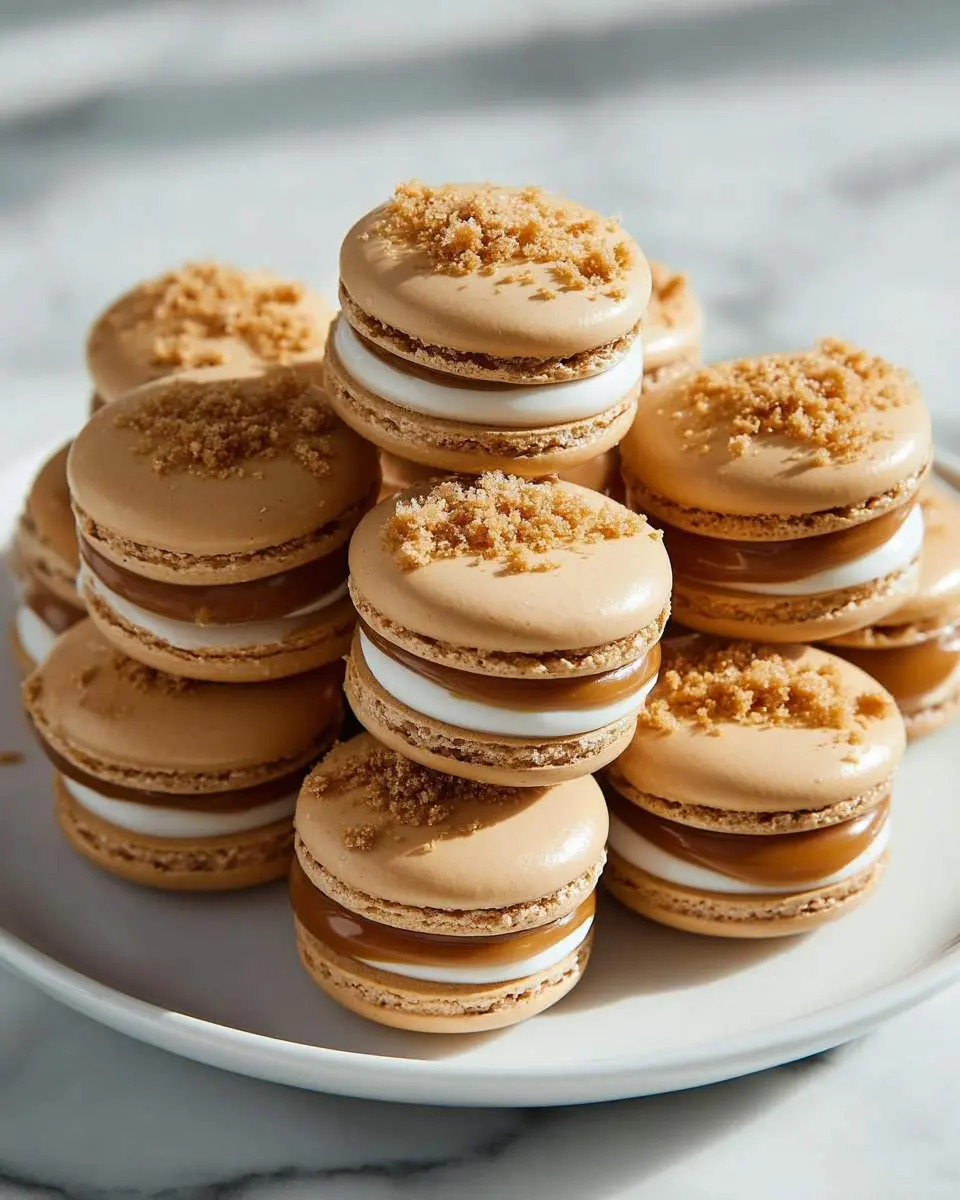
How to Make Biscoff Cookie Butter Macarons
I start by sifting my almond flour and powdered sugar together three times. This feels excessive until you experience your first batch with zero lumps. The meringue builds slowly, sugar streaming in like fine rain while the whisk hums against the bowl. I watch for that moment when the peaks bend just slightly, like a bird’s beak, because stiff peaks lead to cracked shells. Folding the dry ingredients into the meringue is where intuition takes over. I count my strokes, usually landing between 35 and 45, until the batter flows like slow-moving lava and a ribbon dissolves back into itself within thirty seconds. Piping the shells, I hold my breath. The tap-tap-tap of the tray against the counter releases air bubbles, and then comes the waiting, the skin forming, that slight tackiness when you touch them. Baking fills my kitchen with the smell of toasted almonds and sugar, and I know within the first five minutes whether the feet will rise properly. The filling comes together while the shells cool, butter and Biscoff whipped until it holds a swirl. Matching shells by size, sandwiching that generous dollop, and pressing just until the filling peeks out the sides, this is the moment I wait for. If sandwich cookies are your love language, my ube crinkle sandwich cookies offer a completely different but equally satisfying assembly experience.
What I Learned After Three Attempts
Humidity is your enemy here. I once tried making these on a rainy August afternoon and ended with cracked, footless domes that tasted fine but broke my heart. Now I check the weather app like I am planning a picnic. Temperature matters more than I wanted to believe. My oven runs hot, and 300 degrees Fahrenheit is my sweet spot, but yours might need 325. Buy an oven thermometer and trust it more than the dial. The macaronage, that folding stage, terrified me until I realized under-mixing is worse than over-mixing. A few extra strokes saves a hollow shell. My Secret Trick: I add a tiny pinch of cream of tartar to my aged egg whites, maybe an eighth of a teaspoon. It stabilizes the meringue just enough to forgive my impatience during the sugar addition. These Biscoff Cookie Butter Macarons reward that small step with taller feet and more consistent batches.
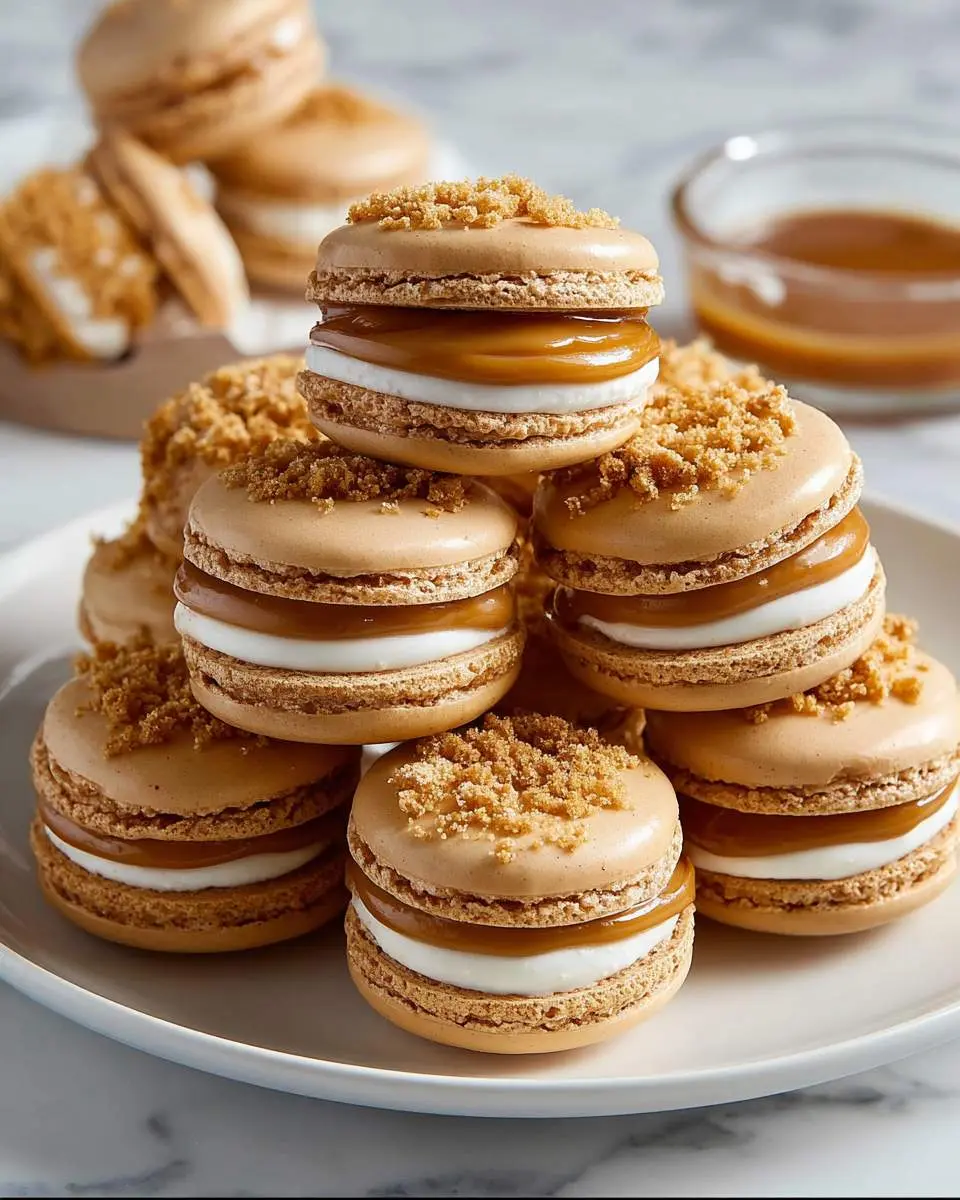
How to Store Biscoff Cookie Butter Macarons
- Store in an airtight container in the refrigerator for up to 5 days, the flavors actually improve after 24 hours as the shells absorb moisture from the filling
- Freeze unfilled shells for up to 3 months, wrapped tightly in plastic wrap then placed in a freezer bag, thaw in the refrigerator overnight before filling
- Freeze filled macarons for up to 1 month, separate layers with parchment paper in a rigid container to prevent crushing
- Bring to room temperature for 15 to 20 minutes before serving, cold macarons have muted flavor and firm texture that softens as they warm
- Do not store at room temperature for more than 2 hours, the buttercream filling spoils quickly
Why These Macarons Fit a Mindful Indulgence
Almond flour brings more protein and healthy fats than wheat flour ever could, and a single macaron satisfies in a way that three sugar cookies never quite manage. The intense flavor of Biscoff means I do not need a massive cookie to feel content. These Biscoff Cookie Butter Macarons are small, deliberate, and built for savoring slowly with coffee.
FAQs
Why did my macaron shells crack on top?
Cracked shells usually mean the batter was too dry or the oven temperature was too high. The meringue needs proper folding to release just enough air, and the shells need that skin to form before baking. Give them 30 to 60 minutes at room temperature until they feel smooth and dry to the touch.
Can I use regular peanut butter instead of Biscoff spread?
Natural peanut butter is too oily and will break your buttercream. If you must substitute, use a commercial creamy peanut butter with stabilizers, though the flavor profile changes completely. Biscoff spread has a unique caramelized sweetness that defines this recipe.
How do I know when to stop folding the batter?
Lift your spatula and let the batter fall back into the bowl. It should flow in a thick ribbon that melts back into the surface within 30 seconds. If it holds its shape, keep folding. If it becomes runny and flat, you have gone too far.
Can I make these without a stand mixer?
A hand mixer works for the meringue but requires patience and a strong wrist, about 8 to 10 minutes on high speed. The macaronage stage is actually easier by hand with a flexible spatula. I have made countless batches this way when my stand mixer was occupied.
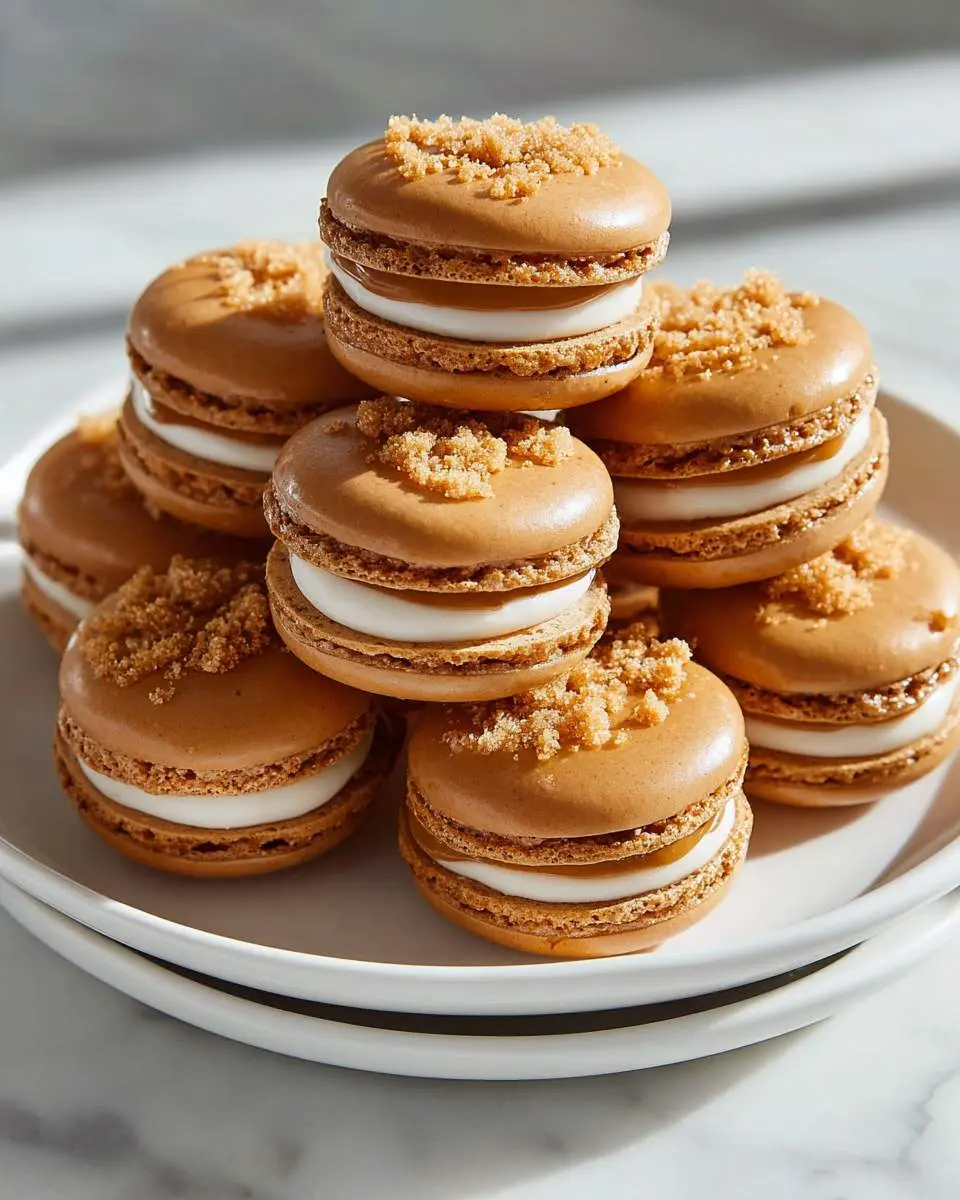

Biscoff Cookie Butter Macarons
Ingredients
Equipment
Method
Notes
Conclusion
These Biscoff Cookie Butter Macarons taught me that precision and intuition can coexist in the same recipe. The first batch might humble you, but the fifth will make you proud. Bake them for someone who deserves a little magic. For another elegant cookie that plays with custard and caramelization, try my creme brulee cookies.
Follow us on Social Media : Pinterest