
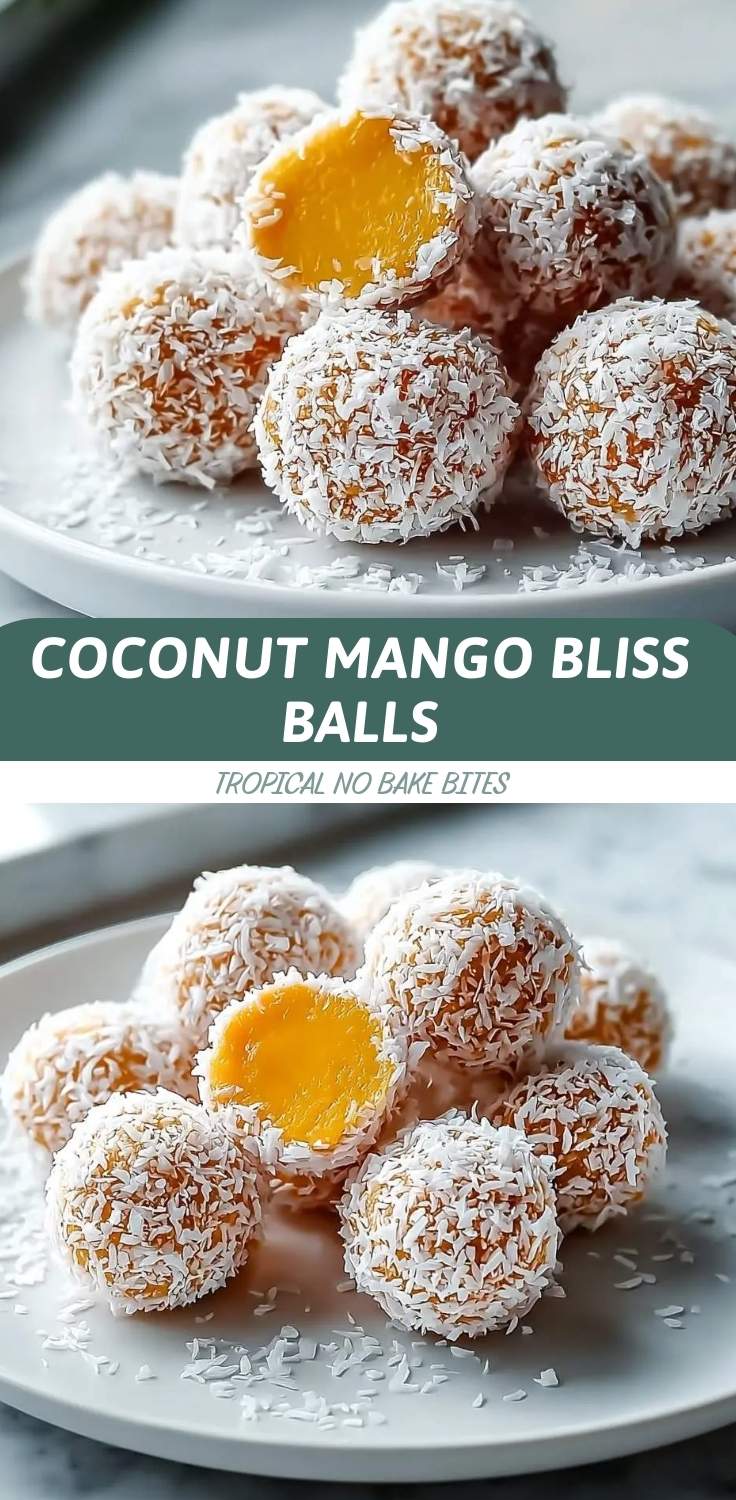
The first time I tasted dried mango, I was sitting on a beach in Florida with sand still stuck to my ankles. That chewy, honeyed sweetness hit different in the humidity. Years later, standing in my kitchen at 10 PM with a craving I couldn’t name, I started throwing coconut and mango into my food processor on a whim. What emerged were these coconut mango bliss balls that somehow captured that exact vacation feeling.
My grandmother kept a mason jar of dried fruit in her pantry that she called her “sunshine stash.” She’d hand me apricots or mango slices when I looked tired, like fruit could fix anything. These bliss balls remind me of her kitchen, the way she’d hum while she chopped, the belief that good things could be simple.
This recipe came together in under fifteen minutes, and I’ve made it probably twenty times since. If you’re into frozen treats, you might also love my strawberry lemon frozen yogurt bark for those same bright, easy vibes.
Why Dried Mango and Coconut Flour Changed Everything
The magic here is balance. Dried mango brings concentrated sweetness and that distinctive tropical chew, while coconut flour absorbs moisture and keeps these from turning into sticky disasters. I learned the hard way that regular flour or even almond meal doesn’t bind the same way. The coconut flour almost drinks up the excess moisture from the mango, leaving you with a texture that holds together but still yields when you bite. Lemon energy balls taught me that citrus can brighten, but here the mango does all the heavy lifting for flavor.

How to Make coconut mango bliss balls
I start by soaking the dried mango in hot water for exactly ten minutes. Not five, not fifteen. Ten minutes brings it back to life without turning it to mush. The food processor gets loud here, that rhythmic thumping as the mango breaks down into a paste that smells like summer.
Then I add the coconut flour, a scoop of protein powder, and a drizzle of honey. The mixture transforms from wet sand to something that clumps when you squeeze it. I pulse in the shredded coconut last, just enough to distribute without pulverizing it. The sound changes, becomes softer, and I know it’s ready.
Rolling happens fast, my palms slightly damp to prevent sticking. Each ball gets a final roll in extra coconut, and I always eat one warm because patience has never been my strength. Lime pie energy bites were my gateway into no-bake snacking, but these feel more indulgent somehow.
What I Learned After Three Batches
The first time I made these, I skipped the soaking step. The mango stayed tough, the food processor struggled, and the final texture was wrong in a way I couldn’t fix. Soaking matters because rehydrated mango blends smoothly and releases its sugars properly.
Room temperature coconut flour blends better than cold. I keep mine in the pantry, and the difference in how it incorporates is noticeable. Cold flour clumps and fights the liquid.
Don’t over-process once you add the shredded coconut. You want visible flecks for texture, not a completely smooth paste. Those little white streaks make each bite interesting.
My Secret Trick: I save the mango soaking water and use a tablespoon of it in the mixture if the dough feels too dry. It carries concentrated mango flavor that plain water can’t replicate.

How to Store coconut mango bliss balls
- Refrigerate in an airtight container for up to 7 days; the coconut oil firms up and improves the texture
- Freeze on a parchment-lined baking sheet first, then transfer to freezer bags for up to 3 months
- Thaw frozen balls in the refrigerator overnight, or at room temperature for 30 minutes
- Do not microwave; the protein powder can turn rubbery and the coconut loses its pleasant chew
Why These Work for My Afternoon Slump
Each coconut mango bliss ball delivers about 6 grams of protein from the powder and natural fats from the coconut that actually satisfy instead of sending me back to the kitchen twenty minutes later. The dried mango contributes quick carbohydrates without the crash of refined sugar, and the fiber from both coconut flour and shredded coconut slows absorption. I reach for these at 3 PM when coffee feels like too much and dinner feels too far away.
FAQs
Can I use fresh mango instead of dried?
Fresh mango contains too much moisture and will make the mixture soggy without extensive baking or dehydrating first. Dried mango provides concentrated flavor and the exact texture needed for no-bake balls. If you only have fresh, dehydrate it in a low oven or food dehydrator until leathery before using.
Why did my mixture turn out crumbly?
Crumbly dough usually means insufficient moisture or over-measured coconut flour. Different brands absorb liquid differently. Add the reserved mango soaking water one teaspoon at a time until the mixture holds together when squeezed. The dough should feel like Play-Doh, not wet sand.
Are these coconut mango bliss balls actually high in protein?
With protein powder in the base and the natural protein from coconut flour, each ball contains roughly 6 grams depending on your powder choice. They’re substantial enough to count as a mini-meal or substantial snack, especially paired with a piece of fruit or handful of nuts.
Can I make these without a food processor?
A high-powered blender works in batches, though you’ll need to stop and scrape frequently. Soak the mango longer, until very soft, then chop finely with a knife and mash with a fork. The texture will be less uniform but still delicious.


Coconut Mango Bliss Balls
Ingredients
Equipment
Method
Notes
Conclusion
These coconut mango bliss balls have earned permanent rotation in my kitchen because they deliver something rare: a treat that feels indulgent but actually sustains me. Make them once, and I suspect they’ll become your sunshine stash too. For another no-bake favorite with serious tang, try my key lime pie yogurt bark.
Follow us on Social Media : Pinterest