
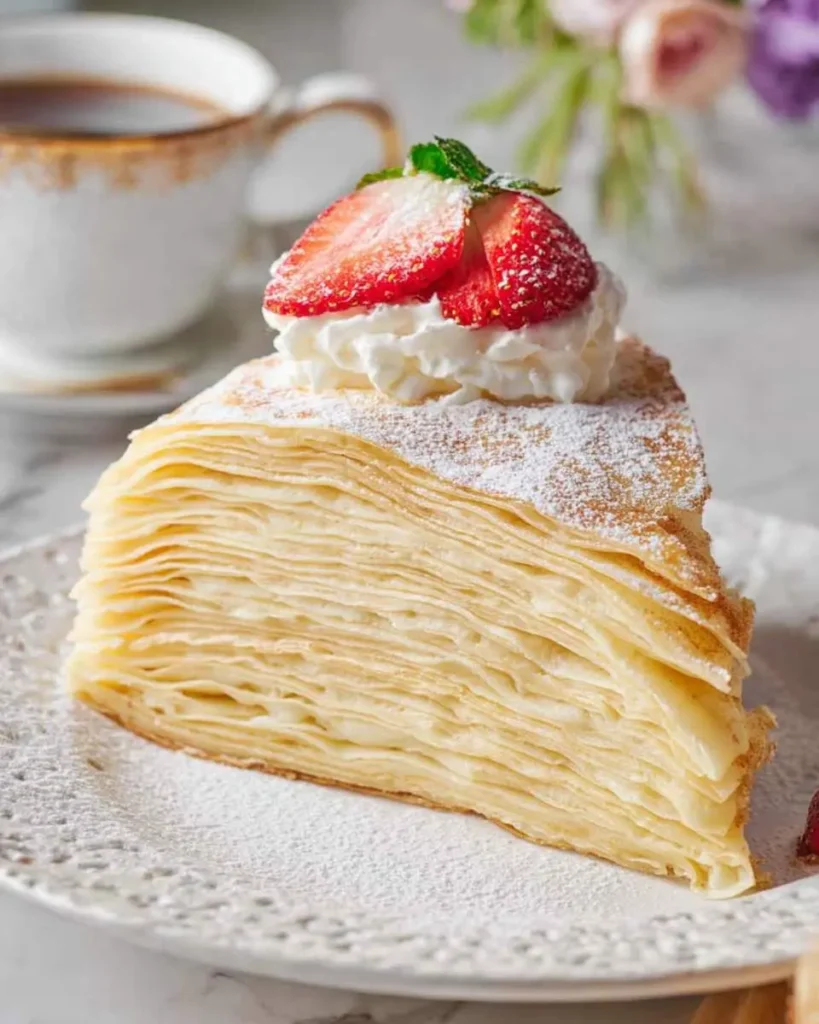
The first time I saw a crepe cake, I stopped mid-scroll. Twenty whisper-thin pancakes stacked like lace, cream oozing between each layer. I had to make one. That weekend, I turned my kitchen into a crepe factory, and three hours later, I understood why this dessert commands $80 at fancy bakeries. The crepe cake is pure edible architecture.
My grandmother made crepes every Sunday morning, swirling batter in her cast iron pan with the confidence of someone who had done it ten thousand times. She never stacked them into cakes, though. I like to think she would have laughed at my ambition, then snuck a second slice.
This recipe taught me patience. It taught me that simple ingredients, treated with care, become something that makes people gasp when you carry it to the table. If you are craving something layered and lovely, you might also adore this cherry cake I developed last spring.
The Ingredients That Make These Paper-Thin Layers Possible
Good butter matters more here than in almost any cake I have made. It creates that subtle nutty edge in each crepe, the flavor that makes people pause and ask what your secret is. Whole milk, not skim, gives the batter body and helps the edges crisp just enough. For the filling, I use mascarpone whipped with heavy cream, something I picked up from a blueberry buckle experiment gone wonderfully right. The crepe cake demands ingredients that can stand on their own, because there is nowhere to hide.

How to Make Crepe cake
The rhythm develops slowly. You pour, swirl, wait for the edges to lift and lace, then flip. Each crepe takes ninety seconds once you find your groove. I work two pans simultaneously now, but my first attempt involved a lot of muttering and one completely destroyed pancake that I ate standing at the stove. The batter rests for an hour, which matters more than I expected. Rested batter produces crepes with that characteristic smooth surface, no bubbles, no toughness. While they cool, you whip the filling until it holds soft peaks, then begin the assembly. Layer, spread, repeat. The stack grows taller and slightly ridiculous. I learned to chill the cake before slicing, something I first understood making lemon ricotta pancakes that needed time to set their structure. The cold firms everything, lets you cut clean wedges that show off those striations.
What I Learned Making This Three Times
My first crepe cake leaned like a tower in Pisa. I had not let the crepes cool completely, and the filling melted into the warm layers, causing structural chaos. Now I spread them on wire racks and wait. Patience is not optional here.
The pan temperature is everything. Too hot, and you get crispy, unrollable disks. Too cool, and the batter pools instead of spreading. I keep a damp towel nearby to wipe the pan between crepes, which prevents buildup that causes sticking and tearing.
Do not skip the rest period for the batter. The flour hydrates fully, the gluten relaxes, and your crepes become supple rather than rubbery. I have tested this side by side. The difference is dramatic.
My Secret Trick: I brush each cooled crepe with a thin layer of warm apricot jam before adding the cream filling. It adds a subtle tartness, helps the layers adhere, and creates a beautiful sheen when you slice.
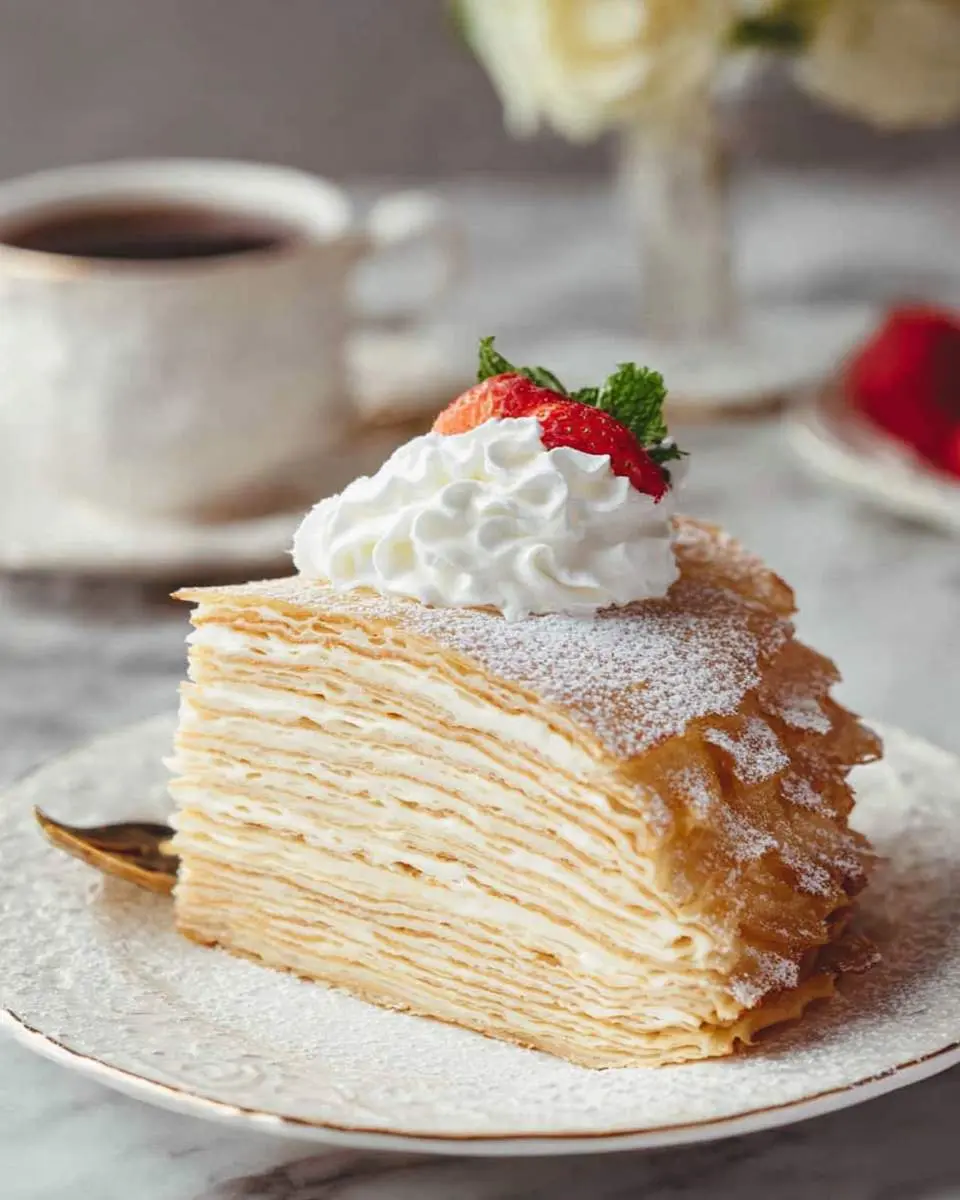
How to Store Crepe cake
- Refrigerate uncovered for the first hour to set the cream, then cover loosely with plastic wrap and refrigerate up to 3 days
- Store in the coldest part of your refrigerator, not the door, to maintain structure
- Freeze individual slices wrapped in plastic then foil for up to 1 month; thaw overnight in refrigerator
- Bring to room temperature for 20 minutes before serving for best flavor and texture
- Do not microwave to reheat; the cream will weep and separate
Why This Elegant Stack Fits a Lighter Dessert Routine
Compared to traditional layer cakes, this crepe cake delivers satisfaction without the heaviness. Each layer is essentially a thin pancake, so you are eating less flour and sugar per slice than you might expect. The mascarpone filling provides protein and richness, meaning a small slice genuinely satisfies. I serve this after heavy meals when guests want something sweet but not overwhelming, and it always disappears.

FAQs
Can I make the crepes ahead of time?
Absolutely, and I recommend it. Stack cooled crepes with parchment between layers, wrap tightly, and refrigerate up to 2 days or freeze up to 1 month. Bring to room temperature before assembling so they remain flexible and do not crack when you spread the filling.
Why did my crepes tear when I flipped them?
Your pan was either too hot, causing the bottom to set before the top cooked through, or you flipped too early. Wait for the edges to lift and the surface to look matte, not shiny. Use a thin offset spatula and commit to the motion without hesitation.
How many layers should a proper crepe cake have?
I aim for 20 to 25 layers, which creates that dramatic cross-section without becoming unwieldy to slice. Fewer than 15 looks skimpy. More than 30 becomes structurally challenging unless you are using a ring mold for support during assembly.
Can I use store-bought crepes?
Technically yes, though the result lacks the tender, buttery quality that makes this dessert special. Store-bought crepes tend to be thicker and rubberier, designed for savory fillings. If you must, look for the thinnest fresh crepes possible, not the packaged shelf-stable variety.
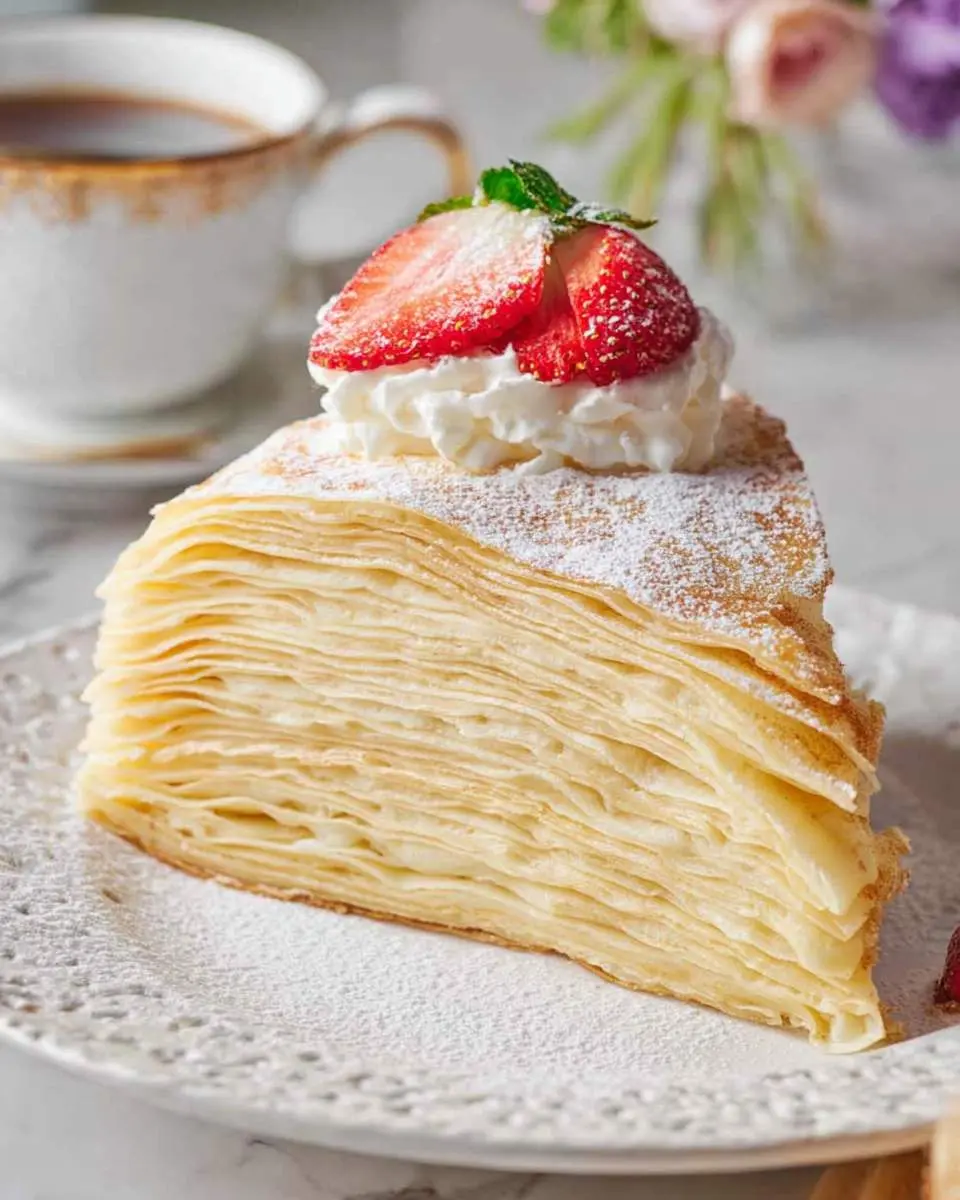

Crepe Cake
Ingredients
Equipment
Method
Notes
Conclusion
This crepe cake taught me that impressive desserts do not require fancy equipment, just time and attention. The first slice you serve, with those perfect horizontal stripes, makes every minute at the stove worthwhile. For another showstopping layer cake, try my strawberry shortcake layer cake next.
Follow us on Social Media : Pinterest