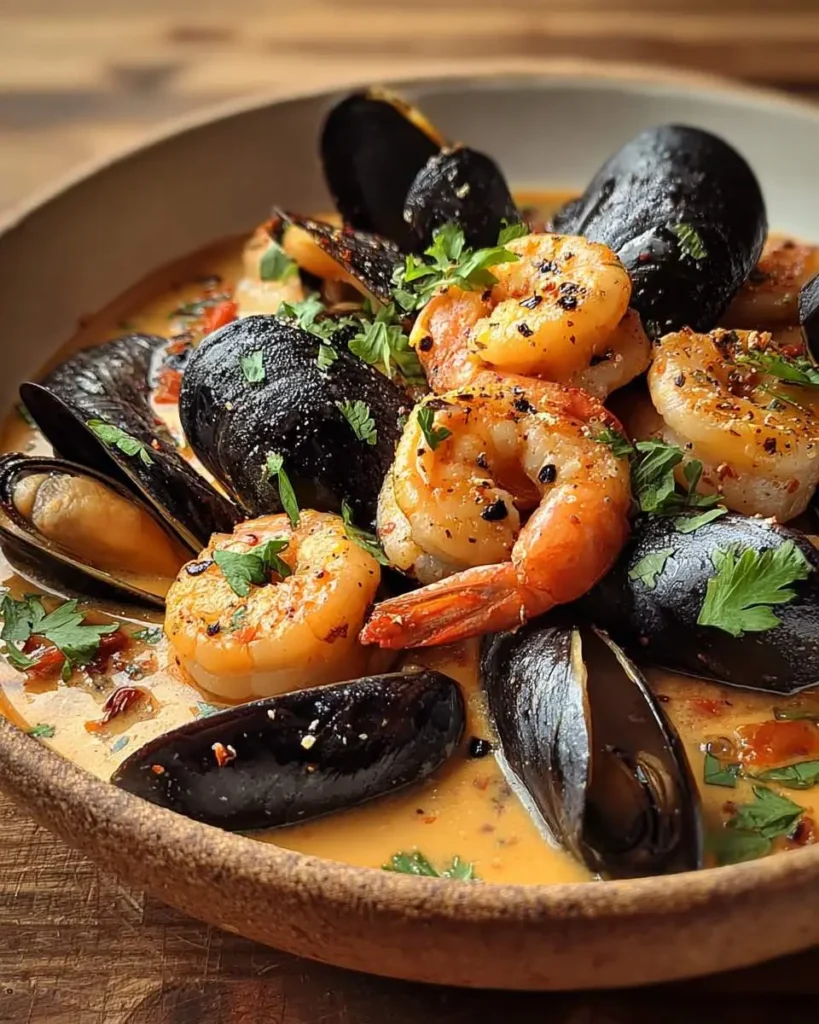
The smell of garlic hitting hot butter still transports me straight to my grandmother’s cramped kitchen in coastal Maine. She never measured anything, just tossed shrimp and mussels into whatever pot was clean, and somehow it always tasted like the ocean itself had come to dinner. That memory is why I still make garlic shrimp and mussels whenever I need to feel grounded, even on the busiest weeknights.
Last October, my husband and I rented a tiny cabin on the Olympic Peninsula. The rain wouldn’t stop, and the only store within twenty miles had questionable produce but beautiful shellfish. I bought everything they had, borrowed a dented Dutch oven from the landlord, and made this dish while listening to water drum against the roof. We ate straight from the pot, barefoot, watching steam fog the windows. That’s the meal I think about when I’m standing at my own stove now.
Seafood doesn’t need to be complicated to be extraordinary. If you’re looking for another simple approach, my baked Boursin salmon has that same effortless elegance.
Why Butter, Wine, and Good Garlic Make This Sing
The foundation here is deceptively simple. I use an entire head of garlic, sliced thin rather than minced, because it softens into sweet, spreadable pockets instead of burning. The mussels contribute their own briny liquor as they open, creating a sauce that no stock could replicate. Dry white wine deglazes the pan and adds acidity to cut through the richness, but the real secret is finishing with cold butter off the heat, swirling until the liquid turns glossy and coats the back of a spoon. I’ve played with variations on shrimp with chimichurri sauce, but this preparation lets the shellfish speak for themselves.

How to Make Garlic Shrimp and Mussels
I start by warming butter and olive oil together until the foam subsides, then slide in those garlic slices. The sizzle should be gentle, not aggressive, you want them golden and tender, not brown and bitter. This takes longer than you’d think, maybe eight minutes of patient stirring. The smell will tell you when they’re ready, that deep, nutty aroma that makes people wander into the kitchen asking what’s for dinner.
The mussels go in next, followed by a generous pour of wine. I cover the pot and shake it once or twice, like popcorn. The sound changes as the shells pop open, a quiet clatter that means dinner is nearly done. I add the shrimp in the final three minutes, nestling them among the open mussels so they poach gently in the garlicky broth. Overcooked shrimp are rubbery and sad, these should curl into loose C-shapes and feel firm but yielding.
The final step happens off the heat. I scatter chopped parsley and lemon zest, then swirl in those last cold butter pieces until the sauce emulsifies into something velvety. For another take on bold shrimp preparations, my Hawaiian garlic shrimp brings a completely different energy with its buttery soy glaze.
What I Learned After Three Attempts
My first batch taught me that mussels hate overcrowding. They need room to breathe and release their steam, or the ones on top stay stubbornly closed while the bottom ones overcook. I now use my widest pot, even if it seems excessive for the quantity.
Debearding mussels matters more than I initially thought. That fibrous tuft can hold grit that no amount of rinsing removes, and biting down on sand ruins the whole experience. I pull firmly toward the hinge end, not away from it, so I don’t tear the meat inside.
Temperature shock is real. Cold shrimp straight from the fridge seize up when they hit the hot liquid, cooking unevenly. I let them sit on the counter while the mussels steam, just ten minutes makes a noticeable difference in texture.
My Secret Trick: I save a few tablespoons of the starchy pasta water when serving this over linguine, then toss the drained pasta directly into the shellfish pot over low heat for thirty seconds. The starch binds the garlicky wine sauce to every strand, creating cohesion that separate plating never achieves.

How to Store Garlic Shrimp and Mussels
- Refrigerate leftovers in an airtight container within two hours of cooking, storing at 40°F or below for maximum one day
- Remove mussels from their shells before refrigerating, the shells trap moisture and accelerate spoilage
- Freeze only the broth with shrimp, never mussels, as reheated mussels turn unpleasantly tough and mealy
- Reheat gently in a covered skillet over medium-low heat with a splash of white wine or water to restore sauce consistency
- Never microwave seafood leftovers, the uneven heating destroys texture and can create rubbery, overcooked spots
Why This Recipe Fits a Light but Satisfying Dinner
Mussels and shrimp deliver complete protein with minimal saturated fat, while the garlic compounds may support cardiovascular health in ways research continues to explore. What I appreciate most about garlic shrimp and mussels is the built-in portion control, the shells slow me down, forcing me to eat mindfully rather than mindlessly. A satisfying bowl feels indulgent while remaining genuinely light, the kind of meal that leaves energy for an evening walk rather than demanding a nap.

FAQs
Can I use frozen mussels for this recipe?
Frozen mussels work in a pinch, but they must be completely thawed and drained first. I pat them dry with paper towels to prevent diluting the sauce. They won’t open and close the same way fresh ones do, so I cook them until just heated through, about four minutes, then proceed with the raw shrimp as usual.
What white wine works best here?
I reach for something dry and crisp, like Pinot Grigio or Sauvignon Blanc, avoiding oaky Chardonnays that compete with the garlic. The wine should taste good enough to drink, since you’ll only use half a cup. I’ve even used dry vermouth in desperate moments, and it works beautifully.
How do I know if a mussel is safe to eat?
Before cooking, discard any with cracked shells or that gape open and don’t close when tapped. After cooking, toss any that remain closed, they were dead before hitting the pot and aren’t safe. This is non-negotiable food safety, not picky cooking.
Can I make this dish ahead for entertaining?
I wouldn’t cook it fully in advance, but I do all my prep ahead. The garlic gets sliced, herbs chopped, and mussels scrubbed and debearded. When guests arrive, the actual cooking takes twelve minutes, and the aroma creates an experience no make-ahead dish could replicate. Garlic shrimp and mussels demand presence, and that’s exactly why people remember them.


Garlic Shrimp and Mussels
Ingredients
Equipment
Method
Notes
Conclusion
This dish reminds me that the best meals rarely require perfection, just good ingredients and attention. Whether you’re feeding yourself on a quiet Tuesday or gathering friends around a table, garlic shrimp and mussels deliver that rare combination of simplicity and drama. For another celebration of shrimp in bold sauce, try my New Orleans BBQ shrimp.
Follow us on Social Media : Pinterest