

This German Onion Pie, or Zwiebelkuchen as it’s traditionally known, is the kind of dish that brings everyone to the table. Its aroma of sweet, caramelized onions and savory bacon baking in a rich, creamy custard instantly makes a house feel like a home. It’s hearty, comforting, and has that special touch perfect for holiday gatherings.
Growing up in a fishing community, our celebrations were always centered around sharing food. Whether it was a fresh catch from the sea or a special bake from the kitchen, the goal was the same: to create something memorable without a lot of fuss. This recipe carries that same spirit; it’s impressive yet wonderfully straightforward.
The beauty of this dish is its rustic simplicity. It’s a fantastic make-ahead appetizer or a standout side dish, making it one of my go-to recipes for Thanksgiving. This savory onion tart delivers incredible flavor with just a handful of quality ingredients, proving that the best meals are often the most honest ones.
What You Need to Make This Recipe
The magic of this German Onion Pie comes from simple, wholesome ingredients working in perfect harmony. We rely on sweet yellow onions, rich thick-cut bacon, and a creamy filling of sour cream and eggs to create that unforgettable flavor. The full ingredient list and measurements are in the recipe card below.
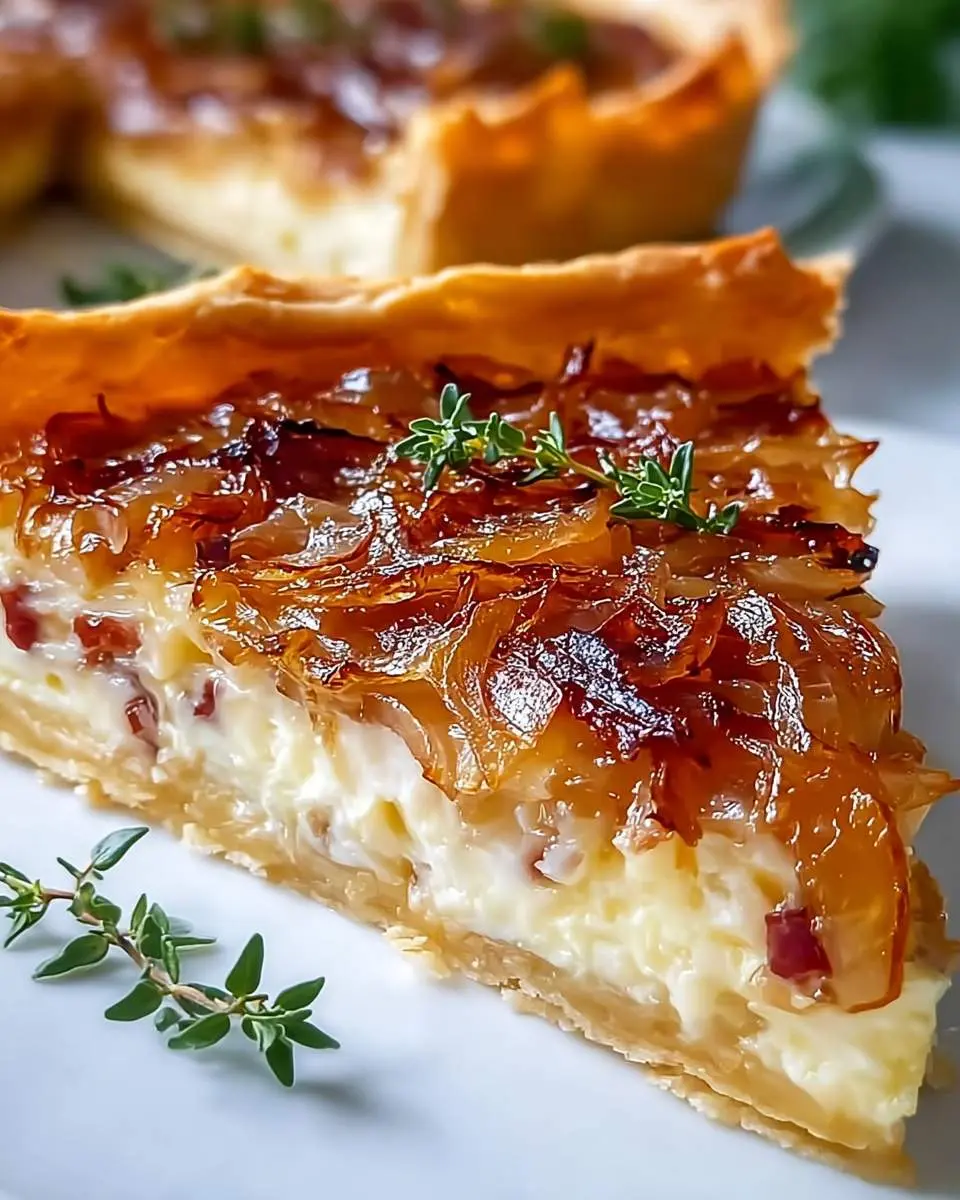
How to Make German Onion Pie
This recipe comes together in three simple stages: preparing the tender yeast crust, cooking down the savory onion and bacon filling, and finally, assembling and baking it all into a golden, bubbly masterpiece. Following this traditional German recipe is surprisingly easy, and the results are truly spectacular.


Authentic German Onion Pie (Zwiebelkuchen)
Ingredients
Equipment
Method
Notes
Vegetarian Option: To make this vegetarian, omit the bacon. Sauté the onions in 2-3 tablespoons of butter or olive oil instead of bacon fat. You may want to add a pinch of smoked paprika to the filling for a smoky flavor.
Storage: Store leftover pie tightly covered in the refrigerator for up to 3 days. Reheat individual slices in a 350°F (175°C) oven or in an air fryer for a few minutes until warmed through and the crust is crisp.
Pro Tips for Making This German Onion Pie
To get that perfect bake every time, I have a few tricks up my sleeve that I’ve learned over the years. These tips will help you master this fantastic German Onion Pie and make it a staple for your celebrations.
For the Perfect Filling
Don’t rush the process of cooking the onions. You want to cook them low and slow until they are soft, sweet, and translucent, not browned. This gentle cooking develops a deep, sweet flavor that is the heart of the dish. This is a key step in any traditional German recipe for Zwiebelkuchen.
Getting the Crust Just Right
Ensure your milk is warm but not hot (around 110°F) to properly activate the yeast without harming it. A happy yeast means a light, tender crust. Also, don’t be afraid to let the dough rise in a cozy, draft-free spot in your kitchen; it makes all the difference.
My Secret Trick: I always add a pinch of freshly grated nutmeg to the sour cream and egg filling. It’s not overpowering, but it adds a subtle warmth that beautifully complements the sweet onions and savory bacon. It’s a small touch that elevates the entire pie.
Fun Variations for German Onion Pie
While the classic recipe is a masterpiece, I love encouraging creativity in the kitchen! Here are a few fun ways to put your own spin on this German Onion Pie.
- Make it Vegetarian: For a meat-free version, simply omit the bacon and sauté 8 ounces of sliced cremini mushrooms with a bit of garlic and thyme. The earthy mushrooms are a wonderful substitute.
- Add Some Greens: Stir a cup of wilted spinach or hearty kale into the onion mixture before adding it to the crust. It adds a lovely color and an extra layer of flavor.
- Bring on the Cheese: For an even richer pie, fold ½ cup of shredded Gruyère, Emmental, or Swiss cheese into the sour cream filling. The nutty cheese pairs beautifully with the onions. This version is a fantastic starter, especially alongside a fun appetizer like our Pumpkin Cheese Ball. This yeast crust pie is wonderfully adaptable.
What to Serve With German Onion Pie
This pie is quite rich and satisfying, so I love to pair it with simple, fresh sides that provide a nice contrast. Planning the perfect menu around this dish is easy and makes for a truly memorable meal.
- A Simple Green Salad: A crisp green salad with a sharp vinaigrette is the perfect companion. The acidity cuts through the richness of the German Onion Pie beautifully.
- White Wine: A dry Riesling or a crisp Pinot Grigio from a coastal region complements the flavors of the onion and bacon wonderfully.
- Roasted Vegetables: Simple roasted asparagus or green beans add a touch of freshness and color to the plate, balancing this traditional German recipe.
How to Store German Onion Pie
One of the best parts about this dish is that it’s just as delicious the next day. Proper storage is key to enjoying those leftovers.
Leftover German Onion Pie can be stored in the refrigerator for up to 3 days. I recommend covering it tightly with plastic wrap or transferring it to an airtight container to keep it fresh.
For reheating, my preferred method is the oven. Place slices on a baking sheet and warm them at 350°F (175°C) for about 10-15 minutes, or until heated through. This helps re-crisp the crust and keeps the filling from becoming rubbery.
Nutritional Benefits
This comforting German Onion Pie offers a wonderful balance of protein from the eggs and bacon, along with satisfying carbs from the delicious homemade crust. It’s a hearty, nourishing option perfect for a celebratory meal shared with family and friends.
FAQs
Can I make German Onion Pie ahead of time?
Absolutely. You can prepare and cook the onion and bacon filling a day in advance and store it in the fridge. When you’re ready, simply prepare the crust, assemble the pie, and bake. This makes day-of prep much easier!
What is the difference between speck and bacon?
German Speck is pork fat that is cured and often smoked, similar to bacon but typically thicker and with a more intense, smoky flavor. Thick-cut bacon is a fantastic and widely available substitute that works perfectly in this recipe.
Can I use a different type of onion?
While yellow onions offer the best balance of sweetness and flavor when cooked down, you could also use sweet Vidalia onions for an even sweeter result. I would avoid using red onions, as their flavor can be a bit too sharp for this dish.
Is the yeast crust difficult to make?
Not at all! This dough is very forgiving, making it great for bakers of all levels. The key is to use fresh yeast and warm (not hot) milk. This simple yeast crust pie provides that authentic, bakery-quality texture that makes the dish so special.
Conclusion
This German Onion Pie is more than just a recipe; it’s an invitation to gather, celebrate, and share a meal made with love. It’s proof that simple ingredients can create extraordinary flavor. Whether you serve it as a hearty appetizer or a savory side dish, it’s guaranteed to be a hit. For another fantastic addition to your holiday spread, consider pairing it with a beautiful Thanksgiving Charcuterie Board. I hope this German Onion Pie becomes a new tradition at your table.