
I still remember the first time I tasted this sauce at a tiny Peruvian chicken joint in Queens. The server brought out a squeeze bottle of something bright green and I thought, no way this is going to be good. One bite later and I was asking for a second bottle of that Peruvian green sauce to take home.
That was three years ago. Since then, I’ve driven back to that neighborhood more times than I care to admit, always ordering extra sauce, always trying to decode what made it so addictive. The tang. The heat that builds slowly. The way it makes even boring roasted chicken taste like something worth crossing boroughs for.
Last month I finally cracked it. My kitchen smelled like cilantro and jalapeño for days while I tested batches. If you’re into sauce obsessions like I am, you might also love my copycat Chick-fil-A sauce that got me through a serious fast-food craving phase.
The Ingredients That Make This Sauce Sing
The magic here is in the balance. Fresh cilantro gives that unmistakable grassy backbone, but it’s the combination of mayonnaise and sour cream that creates this luxurious, almost fluffy texture you can’t get from either one alone. I use a whole jalapeño with the seeds because I want that slow warmth, not a face-melting burn. The vinegar is non-negotiable. it wakes everything up. And please, don’t skip the cotija cheese. It adds this subtle salty funk that makes people ask what your secret is. If you’re a sauce person like me, my tzatziki sauce uses a similar creamy base but goes in a completely different direction.
How to Make Peruvian green sauce
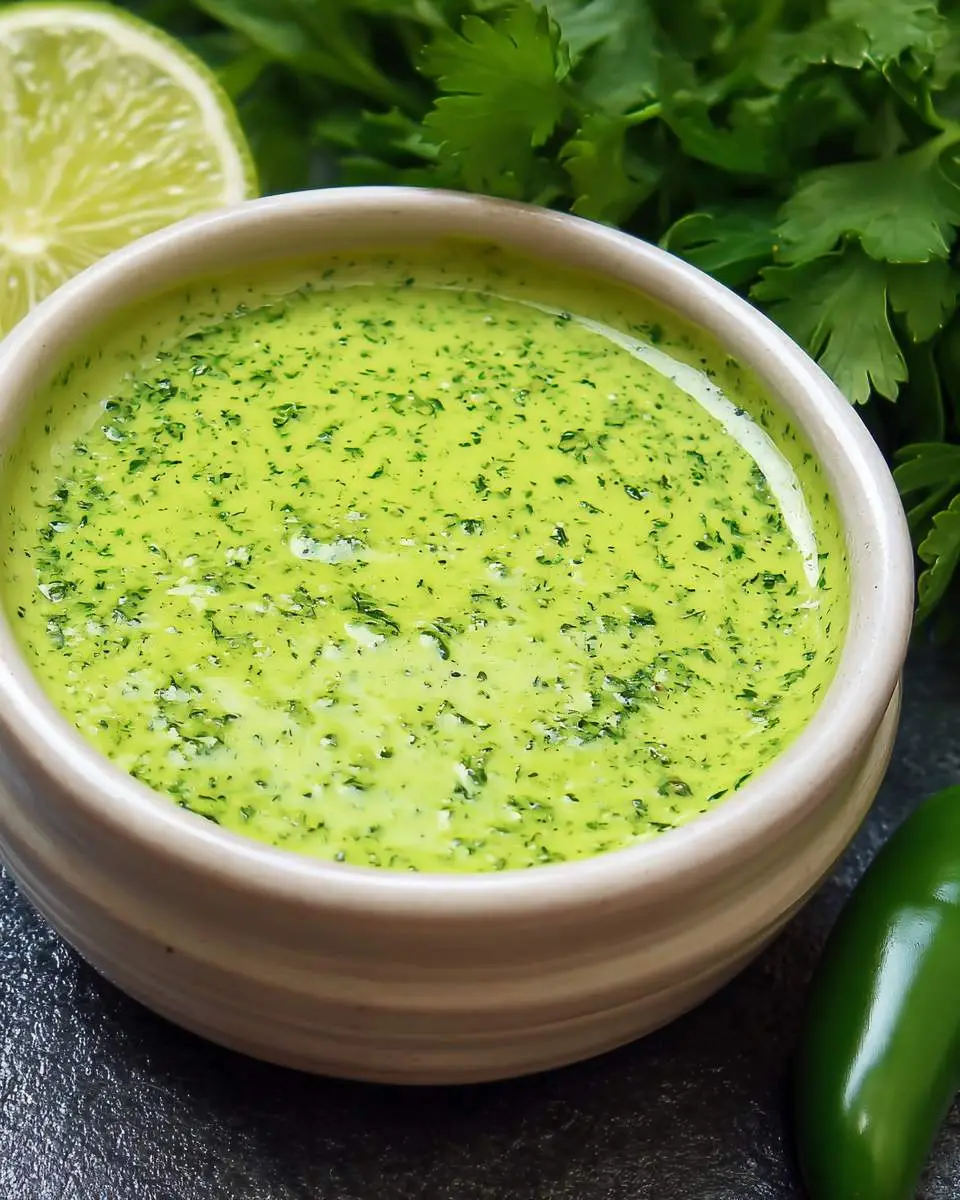
Here’s how it actually goes. I rough-chop everything first. cilantro, jalapeño, garlic. because my blender isn’t fancy and needs the help. The cheese goes in next, then the creamy stuff, then the vinegar and lime juice. I blend on high for a full minute because I want it completely smooth, no green flecks. The sound changes when it’s ready, from chunky grinding to this whirring hum. Taste it immediately. It should make you pucker a little, then the heat should creep in, then you want another spoonful. If it’s too thick, I add a tablespoon of water, not more oil. The consistency should coat a spoon but still drip off easily. My creamy cilantro garlic sauce taught me that patience with blending pays off in texture.
What I Learned After Four Failed Batches
Use the stems. I used to pick leaves only like a fancy cooking show told me. The stems have more cilantro flavor than the leaves and blend smoother. Stop babying your herbs.
Let it rest. This sauce is good immediately but transforms after thirty minutes in the fridge. The garlic mellows, the flavors marry, the heat distributes. I make it before I start cooking anything else.
Don’t substitute the cheese. I tried feta once. I tried parmesan. Both were wrong in ways I can’t fully explain. Cotija has this dry, crumbly texture that dissolves into the sauce without making it grainy.
My Secret Trick: I toast the raw garlic in a dry pan for thirty seconds before blending. Just until it smells fragrant and takes the barest color. It removes that harsh raw bite while keeping all the depth.

How to Store Peruvian green sauce
- Refrigerate in a glass jar with tight lid for up to 5 days. the acid keeps it safe but the fresh herbs fade after that
- Press plastic wrap directly onto the surface if storing more than 24 hours to prevent browning
- Do not freeze. the emulsion breaks and becomes grainy when thawed
- Stir before each use as separation is normal
- Serve cold or at room temperature. never microwave
Why This Sauce Actually Feels Good to Eat
Every time I make this Peruvian green sauce, I’m surprised by how light it feels despite being creamy. The jalapeño brings capsaicin, which studies suggest can boost metabolism slightly. More importantly, fresh cilantro contains antioxidants and the lime juice adds vitamin C. But honestly? I make it because it makes me want to eat more vegetables. Roasted potatoes become exciting. Grilled zucchini disappears. That behavioral shift matters more than any single nutrient.

FAQs
Can I make this less spicy?
Remove the jalapeño seeds and membrane. that’s where most heat lives. You can also substitute half a poblano for a milder pepper with similar green flavor. I don’t recommend skipping pepper entirely because the vegetal quality matters to the final taste.
What do you serve this with?
Peruvian roasted chicken is traditional and perfect. I also love it with grilled shrimp, as a sandwich spread, drizzled over rice bowls, or as a dip for sweet potato fries. My friend uses it as salad dressing thinned with extra lime juice.
Can I use a food processor instead of blender?
You can, but the texture won’t be as silky. A high-speed blender creates that restaurant-style emulsion. If using a food processor, scrape down sides frequently and blend longer than you think necessary.
Is Peruvian green sauce the same as aji verde?
Yes, essentially. Aji verde translates to “green chili sauce” and this is the creamy, cilantro-heavy version you’ll find at most Peruvian-American restaurants. Some versions use huacatay, a Peruvian herb, but cilantro is the accessible substitute that still delivers.


Peruvian Green Sauce
Ingredients
Equipment
Method
Notes
Conclusion
This Peruvian green sauce has earned permanent space in my refrigerator. It transforms ordinary meals into something I actually look forward to. Make a batch this weekend and tell me what you put it on. I’m always collecting new ideas. For another herb-forward sauce with completely different energy, try my chimichurri sauce on grilled steak.
Follow us on Social Media : Pinterest