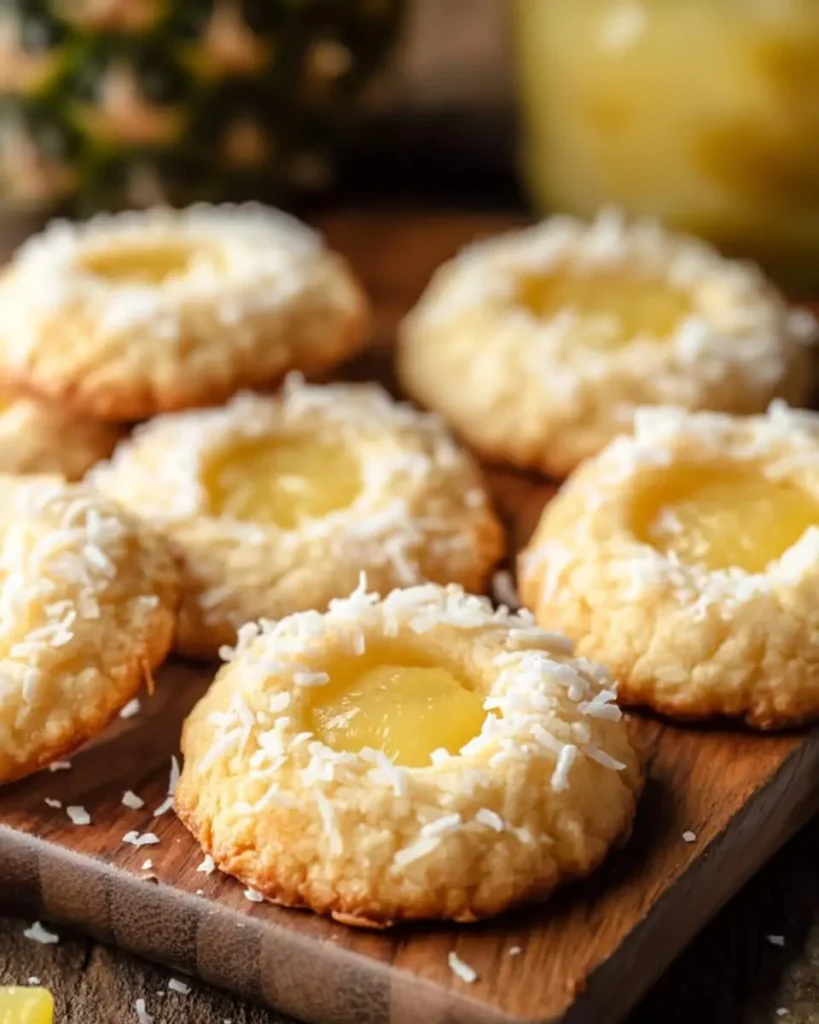
The first time I tasted pineapple and coconut together, I was standing on a humid porch in Florida, watching my grandmother spoon warm jam into thumbprint cookies she’d made that morning. That tropical sweetness stuck with me for years. These pineapple coconut thumbprint cookies bring that exact memory flooding back. the way the tangy fruit cuts through the buttery coconut base, the little pool of jam that stays soft even after cooling.
Last summer, I found myself craving that flavor combination on a rainy Tuesday. Nothing fancy, just something to make the house smell like vacation. I pulled out my grandmother’s thumbprint technique but swapped her usual raspberry for pineapple preserves and added shredded coconut to the dough itself. The result surprised me so much I made three batches in one week.
What I love about thumbprint cookies is their forgiving nature. Even if your thumbprints look messy going in, they settle into these beautiful little nests while baking. If you enjoy melt-in-your-mouth treats, you might also love my strawberry lemonade meltaway cookies. they share that same tender, sandy texture.
Why Coconut and Pineapple Belong in This Dough
The unsweetened shredded coconut is the secret weapon here. it toasts slightly in the oven, creating these chewy, fragrant pockets throughout each cookie. I use unsweetened specifically so I can control the sugar level; the pineapple jam brings plenty on its own. Speaking of which, look for preserves with visible fruit chunks rather than smooth jelly. Those pieces soften into jammy jewels that make every bite interesting. The butter needs to be truly room temperature, not just slightly soft, so it creams properly with the sugar and carries that coconut evenly. For another playful cookie with bold patterning, check out my zebra cookies. they use a similar buttery base with striking results.
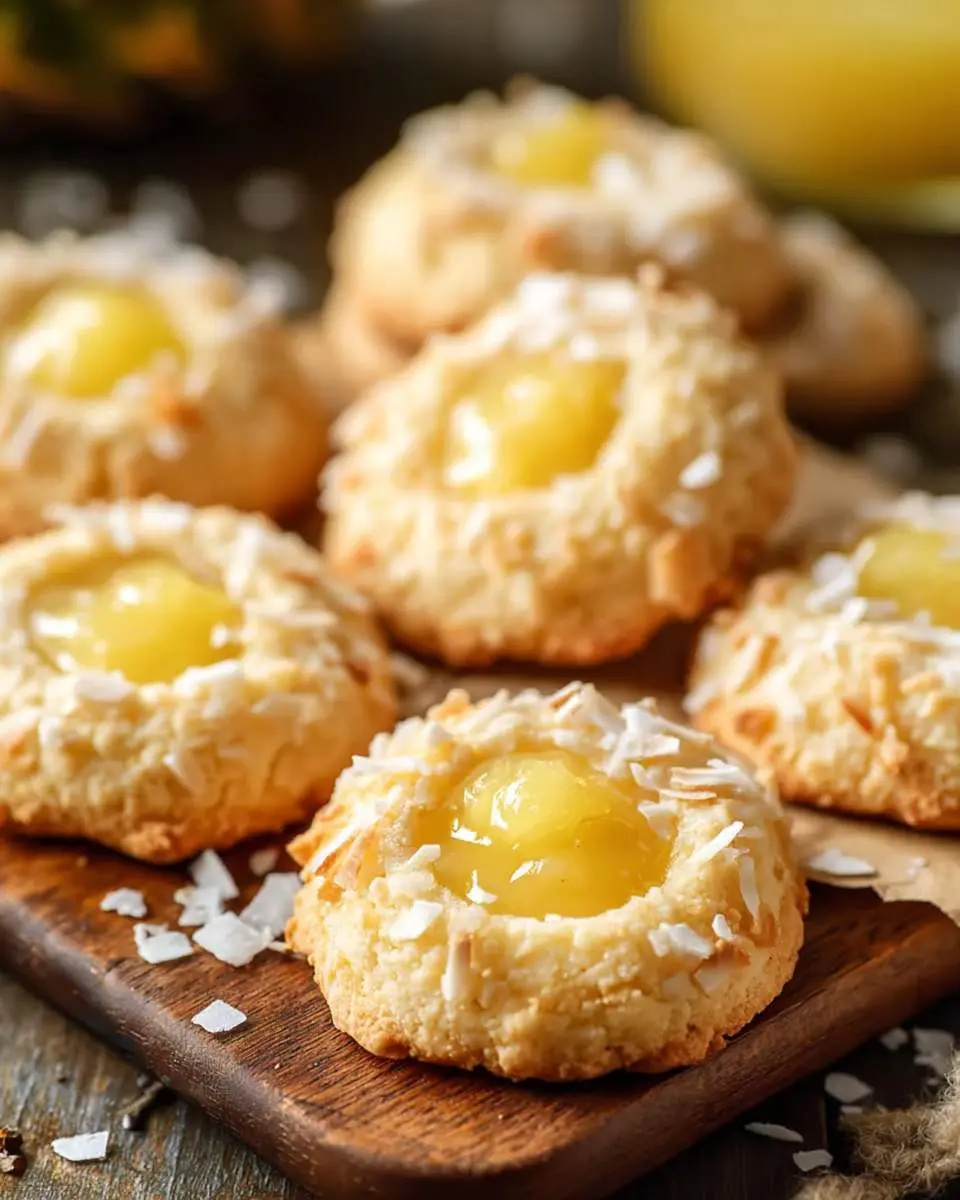
How to Make Pineapple coconut thumbprint cookies
I start by beating butter and sugar until the mixture turns almost white and fluffy. this takes longer than you think, about four minutes, but it’s what creates that tender crumb. The coconut goes in next, and the dough suddenly smells like a beach vacation. I chill it for thirty minutes, just enough to handle without sticking but not so firm that cracking becomes a problem.
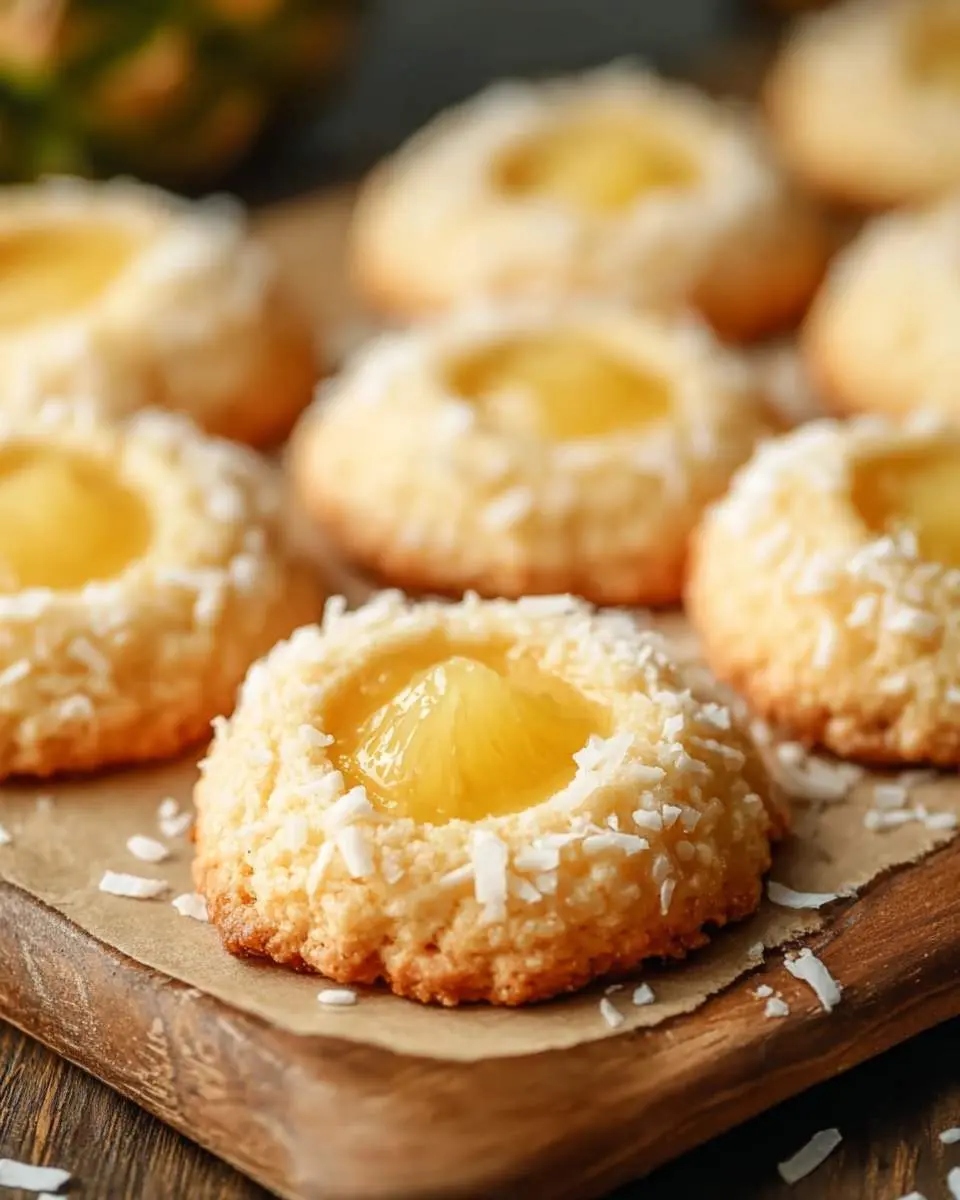
Shaping happens quickly: roll into balls, roll in more coconut for that snowy exterior, then the fun part. pressing your thumb into each center. The dough cracks slightly at the edges, which I love. Those fissures become little ridges that catch the jam. Into the oven they go, and the smell that fills your kitchen is ridiculous. Butter, toasting coconut, and something almost floral from the pineapple. I pull them when the edges turn golden but the centers still look slightly underdone. They firm up as they cool, and that’s when I fill the thumbprints with warm pineapple preserves. The heat helps the jam settle into every crack. For another thumbprint variation with citrus brightness, try my lemon thumbprint cookies. the technique is identical but the flavor profile completely different.
What I Learned After Three Batches
My first attempt spread too much because I skipped the chill time. The second batch cracked badly because I pressed too hard and the dough was too cold. By the third, I found the sweet spot: thirty minutes in the fridge, a gentle thumb press that stops at the first sign of resistance, and jam that’s slightly warmed so it flows without being runny.
Don’t overfill the thumbprints. I know it’s tempting to mound that jam high, but it bubbles over and glues the cookies to your baking sheet. A level teaspoon is perfect.
The coconut on the exterior needs to be pressed firmly into the dough or it falls off during handling. I roll, then gently palm-press each ball to embed those flakes.
My Secret Trick: I warm the pineapple preserves in the microwave for fifteen seconds before filling. Warm jam spreads into every crack and crevice, then sets with a beautiful glossy sheen that cold jam simply cannot achieve.
How to Store Pineapple coconut thumbprint cookies
- Room temperature: Store in an airtight container with parchment between layers for up to 5 days. The coconut stays chewy, the jam stays soft.
- Refrigerator: Not recommended. The cold hardens the butter in the dough and dries out the coconut texture.
- Freezer: Freeze unfilled cookies in a single layer, then transfer to freezer bags for up to 2 months. Thaw and fill with fresh jam when ready to serve.
- Reheating: A quick 5 seconds in the microwave revives that just-baked warmth and softens the jam perfectly.
Why These Cookies Feel Like a Better Choice
Pineapple brings actual fruit content and natural enzymes, while coconut contributes fiber and those satisfying medium-chain fats that keep you fuller than a standard sugar cookie would. These pineapple coconut thumbprint cookies satisfy a sweet craving without the crash I get from frosting-heavy alternatives. The portion size is built in. one or two feels like enough, which I appreciate when I’m baking for my family and want treats to last the week.
FAQs
Can I use fresh pineapple instead of preserves?
Fresh pineapple contains too much moisture and enzymes that break down during baking, creating a watery pool instead of jam. Preserves have been cooked down and stabilized with pectin, which holds the proper texture. If you want to use fresh, cook it down with sugar and lemon juice first until thick and jam-like.
Why did my thumbprints crack so much?
The dough was likely too cold when you pressed it, or you pressed too hard and fast. Let the shaped balls sit at room temperature for five minutes after chilling, then press gently with your thumb until you feel resistance. Small cracks around the edges are normal and charming. deep fissures mean the dough needs more warmth.
Can I make the dough ahead of time?
Absolutely. The dough keeps wrapped in the refrigerator for up to three days. Let it sit out for fifteen minutes before shaping so it’s pliable enough to roll without cracking. You can also freeze the dough balls for up to one month, thawing overnight in the refrigerator before baking.
What if I don’t like coconut texture?
You can substitute coconut flour for the shredded coconut, using about one-third the amount since it absorbs more moisture. The flavor remains tropical but the texture becomes completely smooth. Alternatively, process the shredded coconut in a food processor until fine. you’ll get the flavor with minimal chew.
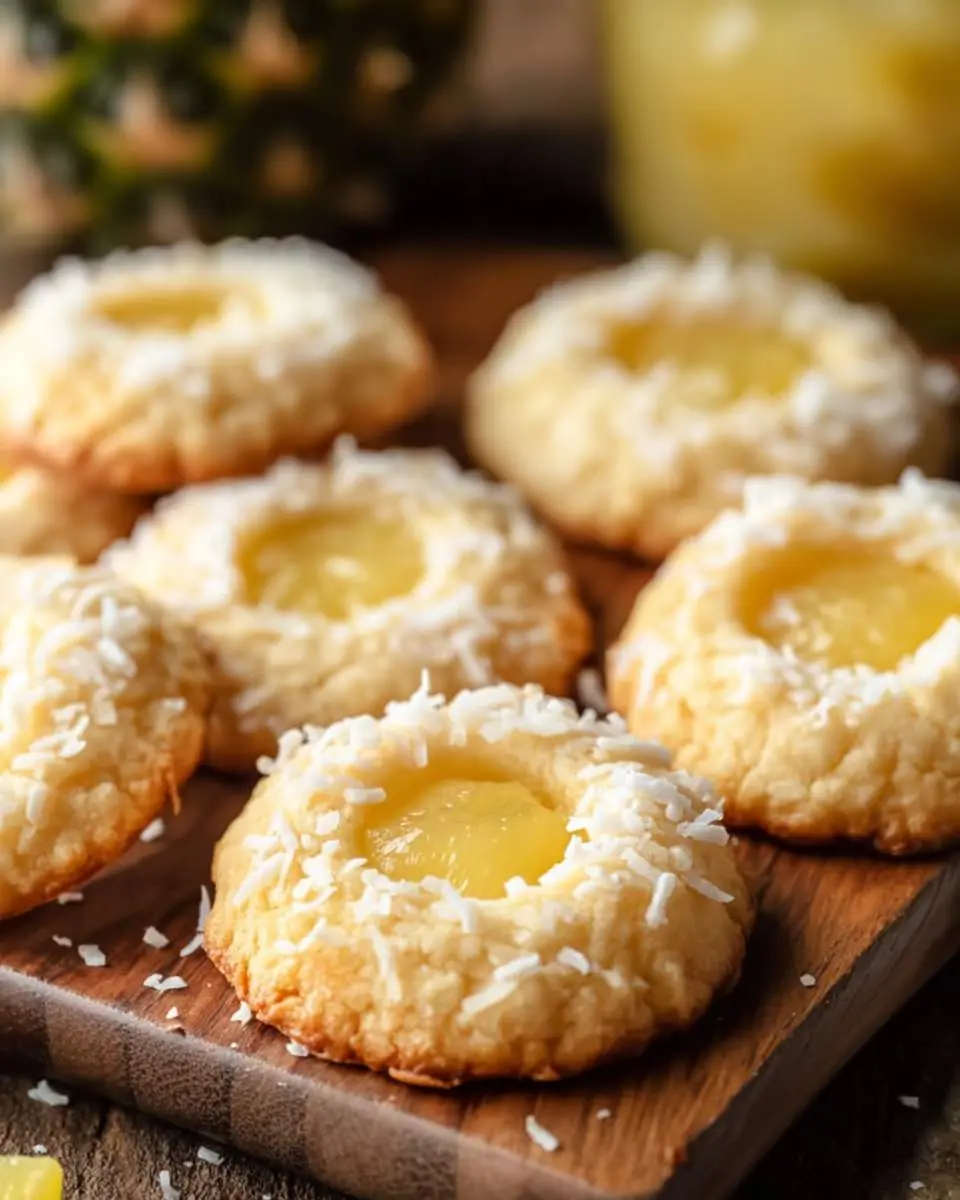

Pineapple Coconut Thumbprint Cookies
Ingredients
Equipment
Method
Notes
Conclusion
These pineapple coconut thumbprint cookies have earned a permanent spot in my rotation. They’re the kind of treat that makes people pause mid-bite and ask what that flavor is. If tropical desserts speak to you, don’t miss my pineapple upside-down sugar cookies. another sweet spin on that sunny fruit. Bake a batch this weekend. Your kitchen will thank you.
Follow us on Social Media : Pinterest