
The first time I made steak fajitas, my kitchen filled with this incredible smell of charred peppers and sizzling meat that drifted all the way to my neighbor’s porch. She actually texted me asking what I was cooking, and I knew right then I’d stumbled onto something worth repeating. That smoky, caramelized aroma wrapping around strips of well-seasoned beef still gets me every single time.
My dad used to take us to this little Tex-Mex place near his office when I was maybe ten years old. They’d bring the fajitas out on a screaming hot cast iron plate, and I’d watch the onions dance and hiss while the whole restaurant turned to look. I tried recreating that moment for years, but it wasn’t until I stopped overcomplicating the marinade that everything finally clicked into place.
What I love most is how this dinner brings people together around the table, everyone building their own perfect bite. If you’re craving more weeknight beef inspiration, I recently shared a Mediterranean ground beef and vegetables recipe that hits that same satisfying, hands-on dinner vibe.
The Ingredients That Make These Fajitas Sing
Skirt steak is my absolute go-to here because it soaks up flavor like a sponge and cooks in minutes flat. I learned the hard way that flank steak works too, but it needs a gentler hand and a slightly longer rest. The real magic happens with the lime juice in the marinade. it tenderizes without turning the meat mushy, something I definitely messed up my first attempt. Fresh bell peppers matter more than you’d think; I grab a mix of red and green because they bring completely different sweetness levels to the party. For another recipe that celebrates simple ingredients doing heavy lifting, check out these chili honey feta rolls that taught me restraint can be delicious.

How to Make Steak Fajitas
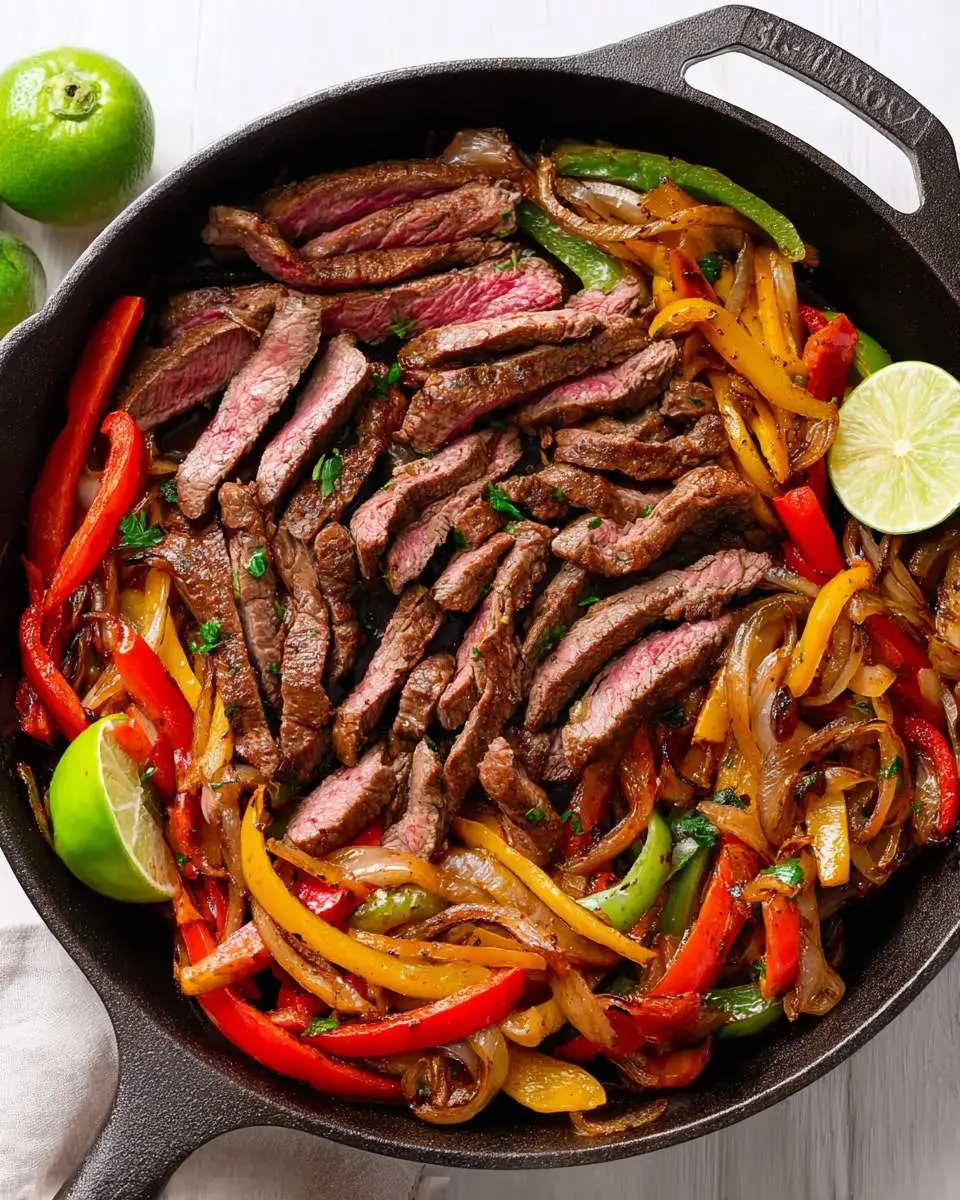
I always start the night before, letting the steak bathe in that citrusy, garlicky marinade while I sleep. The next evening, I crank my cast iron until it’s smoking. literally smoking. and that’s when the transformation happens. The meat hits the pan and immediately contracts, creating these beautiful browned edges while the center stays rosy. I pull it at 130 degrees, let it rest under foil, then slice against the grain while the peppers and onions take their turn in that same screaming hot pan. They need to char, not steam, so I resist the urge to stir constantly. The sound of onions hitting that hot surface, that sharp sizzle followed by the sweet smell of caramelization, tells me everything is going right. If you want to explore more steak-centered dinners, this steak queso rice recipe uses a similar quick-cooking method with completely different results.
What I Learned After Making These Ten Times
Patience with the pan temperature changed everything for me. I used to rush the sear and ended up with gray, sad meat that tasted fine but never thrilled anyone. Now I wait until the oil shimmers and barely starts to smoke. that extra ninety seconds makes the difference between good and restaurant-worthy.
Resting the steak is non-negotiable, even when I’m starving and the house smells incredible. Those ten minutes let the juices redistribute so every slice stays moist instead of pooling on the cutting board.
I finally invested in a proper meat thermometer after too many overcooked disasters. Medium-rare pulls at 130, carries to 135 while resting, and hits that perfect pink center every single time.
My Secret Trick: I save a few tablespoons of the marinade before it touches raw meat, then brush it on the vegetables during their final minute in the pan. That concentrated flavor glaze makes the peppers and onions taste like they’ve been cooking all day.
How to Store Steak Fajitas
- Refrigerate cooled steak and vegetables separately in airtight containers for up to 4 days. storing them together makes everything soggy
- Keep tortillas wrapped tightly at room temperature for 2 days, or freeze the stack with parchment between each one
- Freeze sliced steak and peppers in a single layer on a baking sheet first, then transfer to freezer bags for up to 3 months. this prevents clumping
- Reheat steak gently in a skillet over medium-low with a splash of water, covered, for about 3 minutes. the microwave turns it rubbery
- Revive cold tortillas by wrapping in a damp towel and microwaving 30 seconds, or charring directly over a gas flame for 10 seconds per side
Why This Dinner Earns a Weekly Spot in My Rotation
Steak fajitas deliver serious protein without the heavy feeling that lingers for hours. The bell peppers contribute more vitamin C than an orange, and I love knowing I’m feeding my family something that actually supports their immune systems while tasting like a treat. The balance of lean beef, fiber-rich vegetables, and controlled portions of carbohydrates from the tortillas keeps energy steady instead of spiking and crashing. It’s the kind of meal that satisfies physically and mentally. no deprivation, just real food that happens to love you back.

FAQs
What cut of steak works best for fajitas?
Skirt steak is traditional and my personal favorite for its loose grain and incredible flavor absorption. Flank steak runs a close second but slice it thinner and against the grain more aggressively. Avoid expensive cuts like ribeye. they actually perform worse here because the fat doesn’t render properly in quick, high-heat cooking.
Can I make the marinade without fresh lime juice?
Bottled lime juice works in a pinch, though fresh really does make a difference in brightness. I’ve used a mix of half lemon and half lime when that’s what I had, and nobody complained. The acid is essential for tenderizing, so don’t skip it entirely. even a splash of vinegar can substitute if you’re truly stuck.
Why do my peppers always turn out soggy?
Your pan isn’t hot enough, or you’re crowding it. I cook peppers in batches if needed, leaving space between pieces so steam escapes instead of trapping moisture. Don’t stir constantly. let them sit undisturbed for 2-3 minutes to develop that char that transforms texture and flavor.
Is there a good way to make these for a crowd?
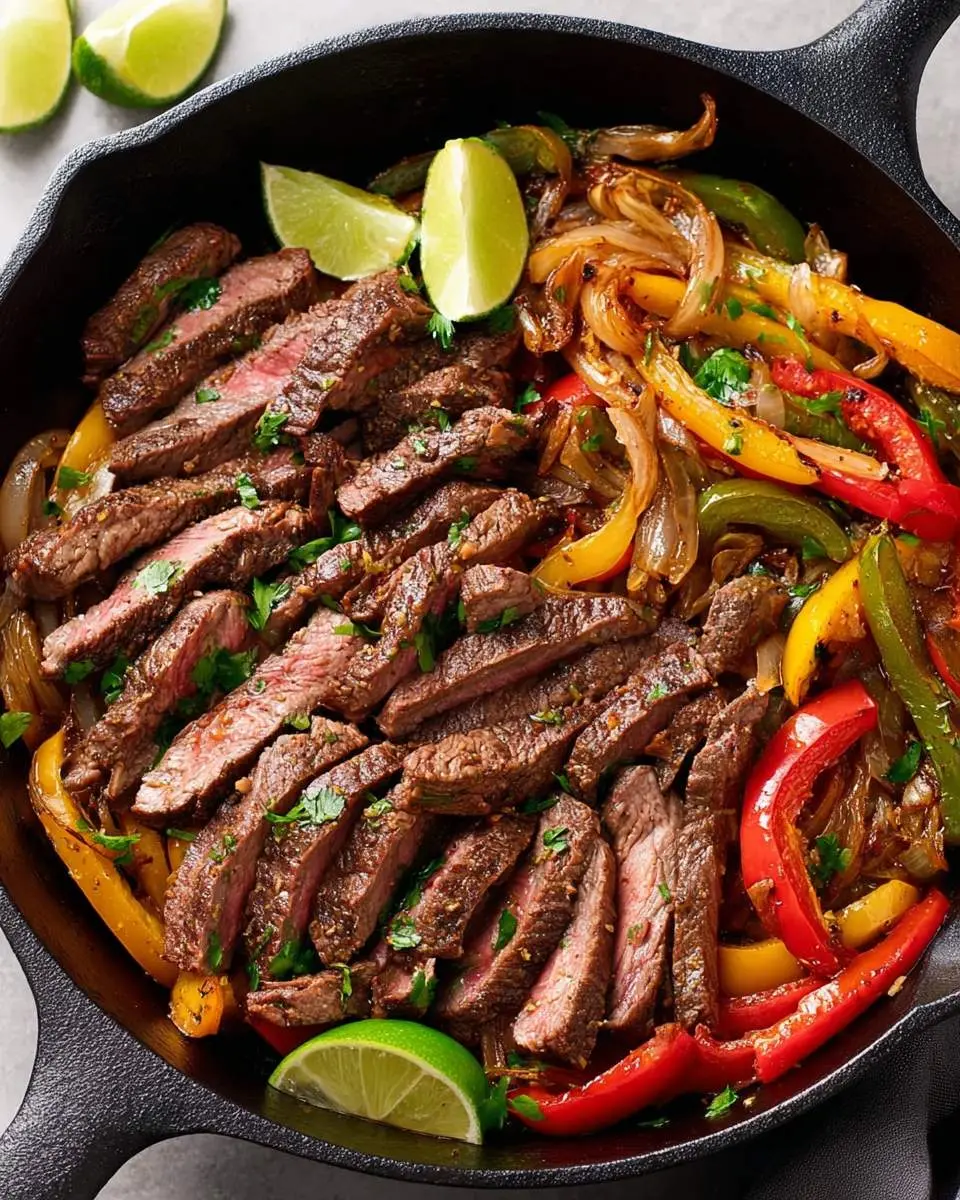
Slice and marinate the steak up to 24 hours ahead, then cook in batches and keep warm in a 200-degree oven on a wire rack set over a baking sheet. The rack prevents the bottom from steaming against the pan. Warm tortillas wrapped in foil alongside, and set out toppings for guests to build their own steak fajitas exactly how they like.

Steak Fajitas
Ingredients
Equipment
Method
Notes
Conclusion
These steak fajitas have become my reliable answer to “what should we have for dinner?” when I want something that feels special without requiring a special occasion. The sizzle, the colors, the way everyone leans in to build their perfect bite. it never gets old. If you’re looking for a lighter take on the same concept, my chicken fajitas use the exact same technique with equally delicious results.
Follow us on Social Media : Pinterest