
The first time I tasted properly cooked octopus, I was standing at a tiny taverna in Greece, watching the owner beat tentacles against a rock before threading them onto skewers. That smoky char, the yielding texture that gave way with just the slightest resistance. I knew I had to learn grilled octopus at home. It took me years to stop being intimidated by this eight-armed mystery, but once I cracked the code, it became my signature summer dish.
My breakthrough came during a rainy Tuesday when I finally accepted that patience beats brute force. I had ruined three octopuses before that. rubbery, chewy disasters that my dog wouldn’t even touch. The fourth attempt changed everything. I remember calling my mother, practically shouting into the phone that I had done it, that the tentacles actually bent without snapping back like a rubber band.
Now I make this whenever I need to remind myself that kitchen failures are just data collection. If you are exploring seafood beyond the usual suspects, you might also enjoy my lemon garlic butter mussels. another dish that taught me to trust the process.
The Ingredients That Transform Tentacles Into Treasure
Great grilled octopus starts with three non-negotiables: a whole fresh or frozen octopus, a bottle of good olive oil you would actually drink, and dried oregano that still smells like a Mediterranean hillside. The olive oil matters more than you think. it carries the smoke, creates the crust, and keeps everything luxurious. I use a Greek extra virgin so peppery it makes the back of my throat catch. The oregano gets rubbed between my palms until it crumbles, releasing oils that perfume the meat during its slow tenderizing bath. Some people add bay leaves or peppercorns to the poaching liquid, but I keep mine simple: water, salt, and a wine cork. Yes, really. The cork’s enzymes supposedly help tenderize, though I mostly do it now because that Greek taverna owner swore by it, and I am not about to argue with tradition. If mayonnaise-topped seafood speaks to you, my baked mussels with mayonnaise use a similar trust-the-process approach.
How to Make Grilled Octopus
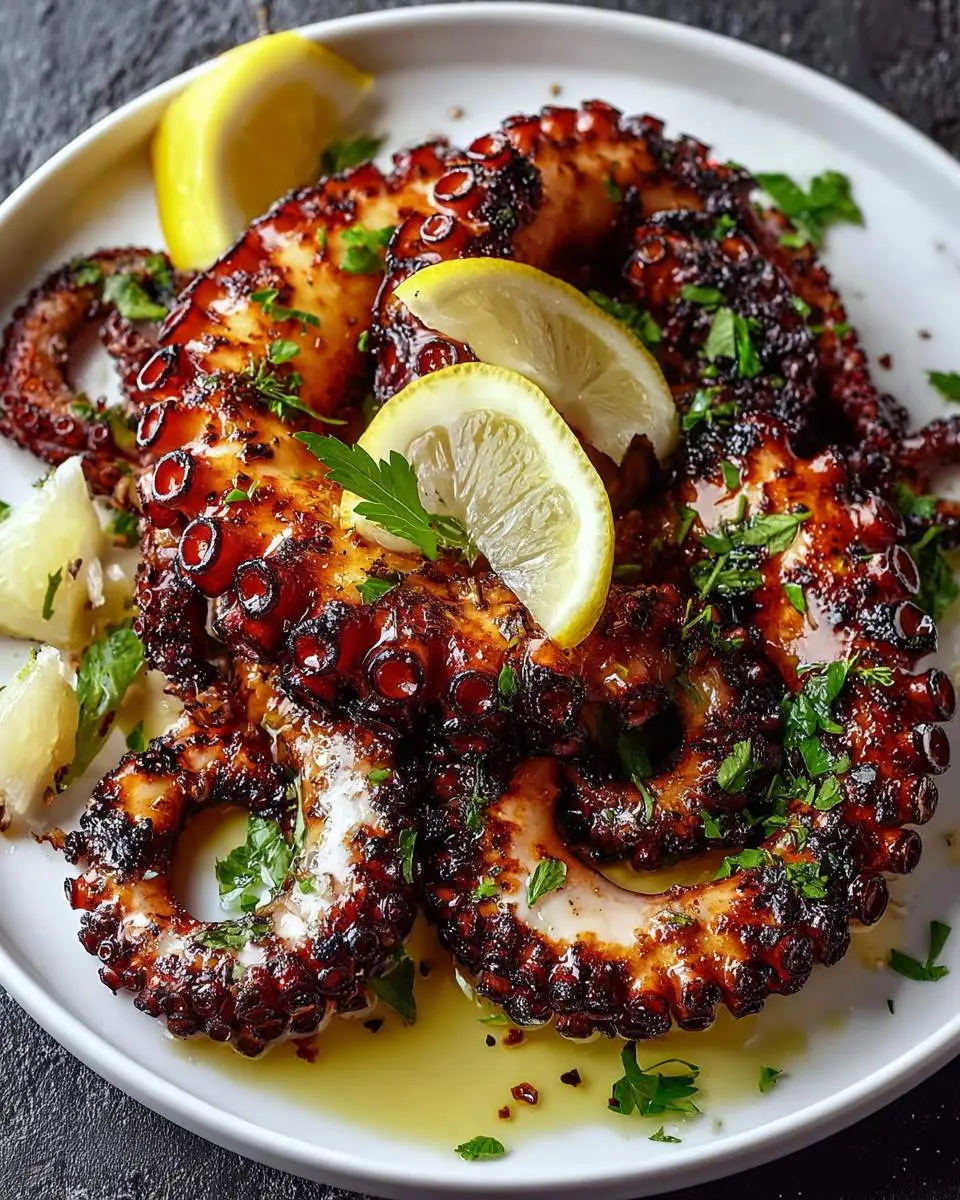
The journey from raw to remarkable happens in two distinct acts. First comes the gentle poaching, where the octopus simmers in barely bubbling water until a knife slides through the thickest part of a tentacle without any catch. This takes longer than recipes suggest. often ninety minutes for a two-pounder. I set a timer and walk away, resisting every urge to crank the heat. The kitchen fills with a briny, almost sweet aroma that makes my stomach growl embarrassingly loud.
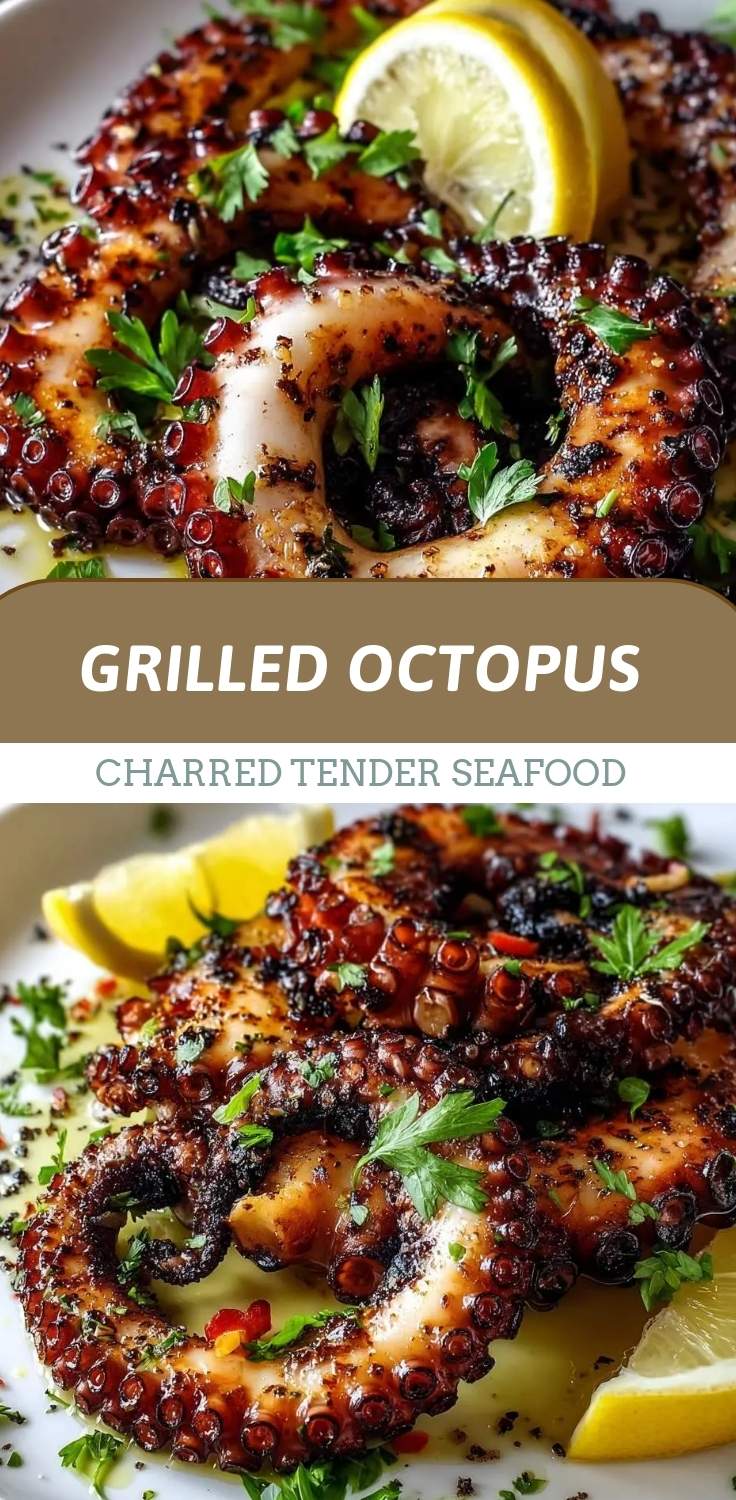
Once cooled, I pat the tentacles dry with more care than I give my own face after washing. Moisture is the enemy of char. The grill needs to be screaming hot, hot enough that the oil sizzles violently when it hits the grates. I lay the tentacles across the bars and do not touch them for four full minutes. The sound is aggressive, almost angry. that is the sound of flavor developing. When I finally flip them, the char marks are deep and beautiful, the edges curling and crisping like bacon.
The final toss with lemon, parsley, and more olive oil happens off heat, in a warm bowl where everything gets friendly. The acid brightens, the herbs release their last volatile oils, and I always steal a piece before it reaches the table. For another seafood dish that rewards careful timing, try my garlic shrimp and mussels. the same patience applies.
What I Learned From Ruining Four Octopuses
Freezing before cooking is not cheating. it is insurance. Commercial octopus is often frozen anyway, and the ice crystals break down tough fibers. If yours is fresh, pop it in the freezer overnight, then thaw. The texture difference is dramatic.
Never salt the poaching water like pasta water. The octopus is already ocean-salty, and concentrated brine turns the outer layer tough. I use barely a tablespoon per quart, just enough to season the interior gently.
The tentacles will curl dramatically on the grill. I embrace this. those curled edges get extra crispy. but if you want picture-perfect straight tentacles, weight them down with a foil-wrapped brick or heavy pan for the first two minutes.
My Secret Trick: Save the poaching liquid. Reduce it by half, freeze in ice cube trays, and you have instant seafood stock that makes risotto taste like it came from a restaurant with a Michelin star.

How to Store Grilled Octopus
- Refrigerate in an airtight container with any leftover olive oil and lemon juices, up to 3 days. the acid helps preserve texture
- Store at 40°F or below, keeping tentacles whole rather than sliced until ready to serve again
- Freeze only the poached, ungrilled octopus for up to 2 months. grilled octopus becomes rubbery when frozen and reheated
- Reheat gently in a 300°F oven wrapped in foil with a splash of water, 10-12 minutes, or quickly in a hot skillet with olive oil for 2 minutes per side
- Never microwave. the texture destroys itself in seconds
Why This Recipe Belongs in Your Regular Rotation
Grilled octopus delivers remarkable nutrition without the heaviness of red meat. That two-pound octopus feeds four generously with roughly 300 calories per serving, mostly from the heart-healthy olive oil you control. The meat itself is lean protein packed with B12 and iron. nutrients I actually feel the next day, that subtle energy lift that makes me reach for my running shoes instead of the remote. The oregano brings more than flavor; its antioxidants survive the heat surprisingly well, adding a small but real boost to an already clean meal.
FAQs
How do I know when the octopus is tender enough to grill?
Slide a paring knife into the thickest part of a tentacle. It should meet no resistance, like piercing a ripe peach. If you feel any rubbery catch, keep simmering. I check every fifteen minutes after the first hour. patience here saves disaster later.
Can I use pre-cooked frozen octopus from the store?
Yes, and I have on busy weeknights. Thaw completely, pat aggressively dry, and reduce grilling time to two minutes per side just to char and warm through. The texture will not match homemade poaching, but it is respectable for a twenty-minute dinner.
Why did my grilled octopus turn out rubbery?
Either you under-poached or over-grilled. This protein has two textures: properly tender or inedibly tough, with almost no middle ground. Grilled octopus requires that long gentle simmer first. there is no shortcut that works.
What wines pair best with this dish?
I reach for Assyrtiko, that minerally Greek white that tastes like volcanic rocks and citrus. Albariño works beautifully too. anything with salinity and acid to match the char and lemon. Avoid heavy reds; they fight the smoke rather than complementing it.


Grilled Octopus
Ingredients
Equipment
Method
Notes
Conclusion
This grilled octopus taught me that the best kitchen skills come from repeated failure and stubbornness. Serve it to people you love, watch their surprise when they realize home cooks can do this, and pour yourself something cold while the grill does its work. For another island-inspired seafood experience, my Hawaiian garlic shrimp brings that same vacation energy with a fraction of the time.
Follow us on Social Media : Pinterest