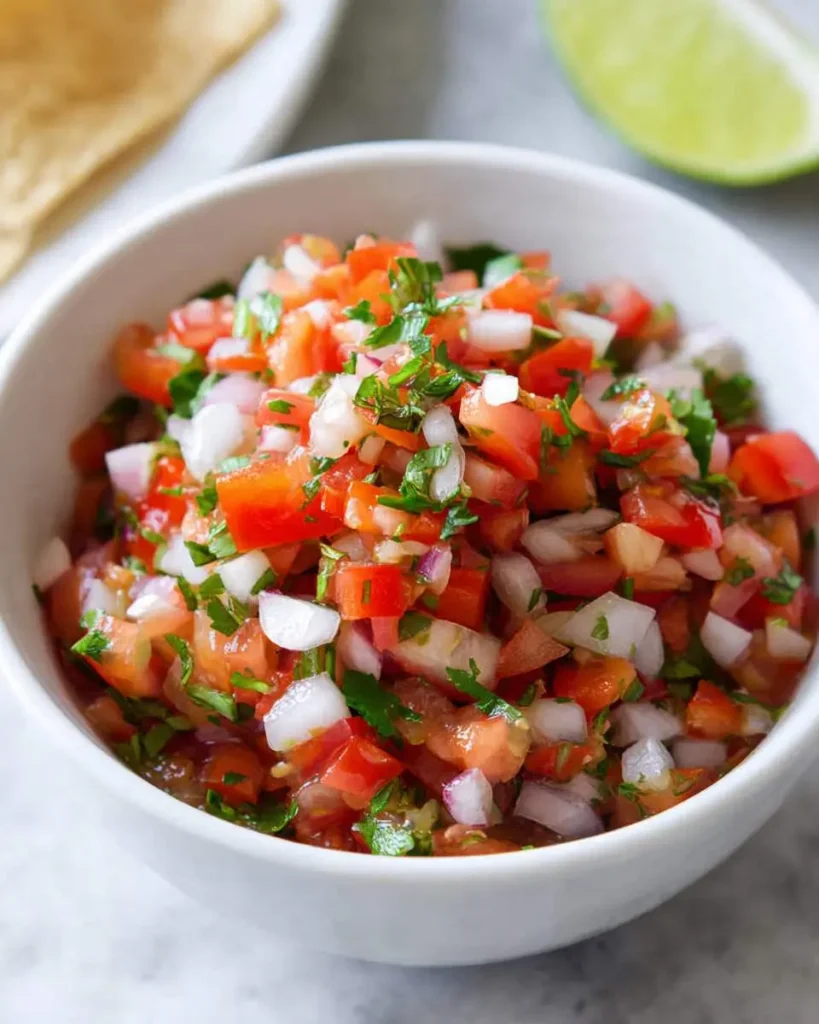
The first time I tasted real pico de gallo, I was standing in a tiny taqueria in San Diego, watching a woman chop tomatoes with a knife that looked older than I was. The smell of lime and cilantro hit me before the bowl even reached my table. fresh, sharp, alive. That moment ruined jarred salsa for me forever.
Back home, I spent months trying to recreate that balance. My early attempts were either too watery, too bland, or somehow both at once. Then my neighbor Maria, who grew up in Jalisco, finally took pity on me and showed me how her mother made it. The secret wasn’t fancy technique. it was patience with the tomatoes and respect for each ingredient.
Now this pico de gallo lives in my fridge from May through September, when tomatoes actually taste like something. If you’re building a sauce collection, I also keep this Thai peanut sauce on hand for weeknight noodles.
Why Tomatoes and Onions Need Equal Billing
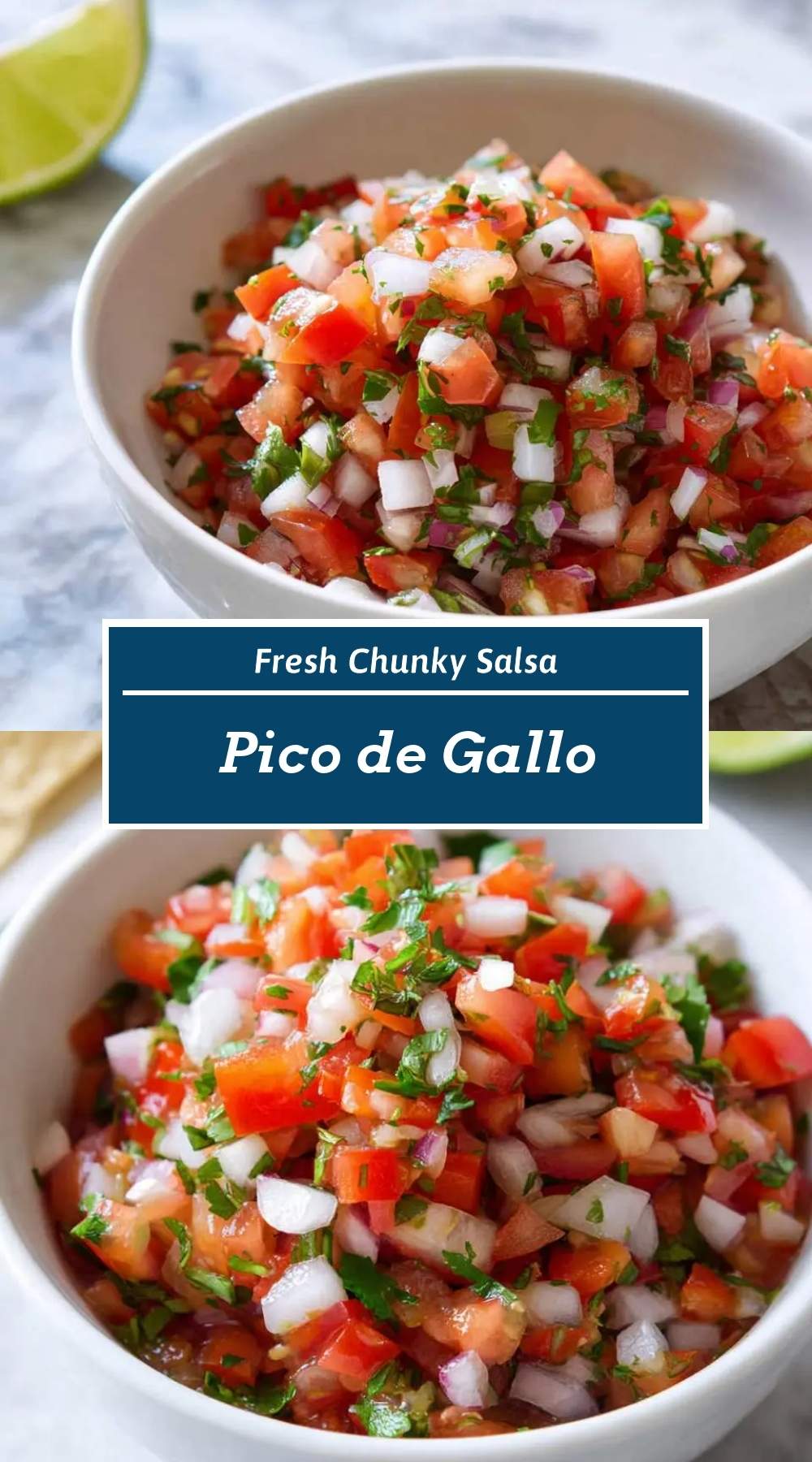
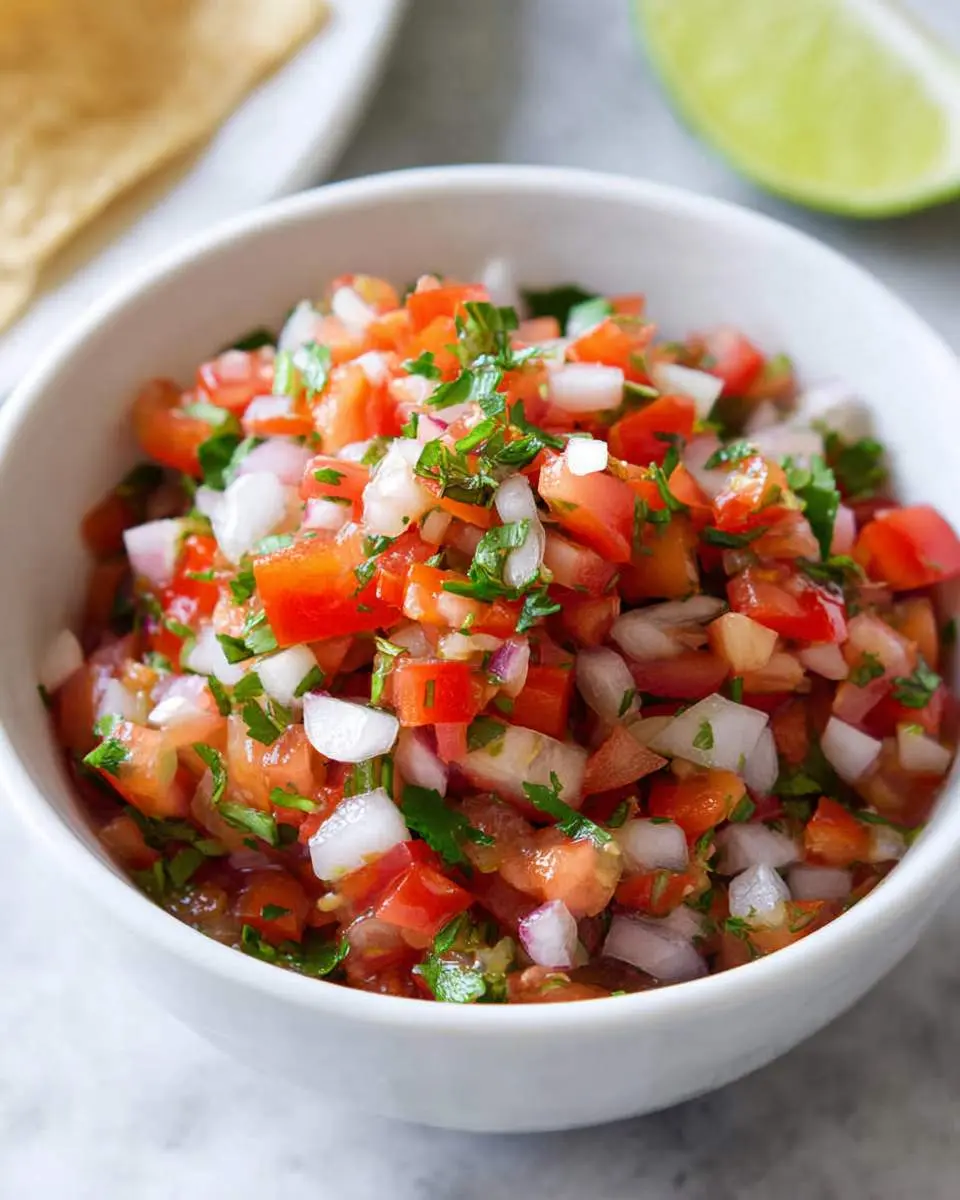
The magic of pico de gallo happens in the tension between sweet and sharp. I use Roma tomatoes because they’re meaty and don’t turn to mush. watery salsa is a tragedy that still haunts my early attempts. White onion brings the bite that balances the tomato’s sugar, and I never skimp on it despite the tears. Cilantro divides households, but I chop the stems too; that’s where the real flavor lives. This combination is simpler than my Peruvian green sauce, but simplicity demands precision.
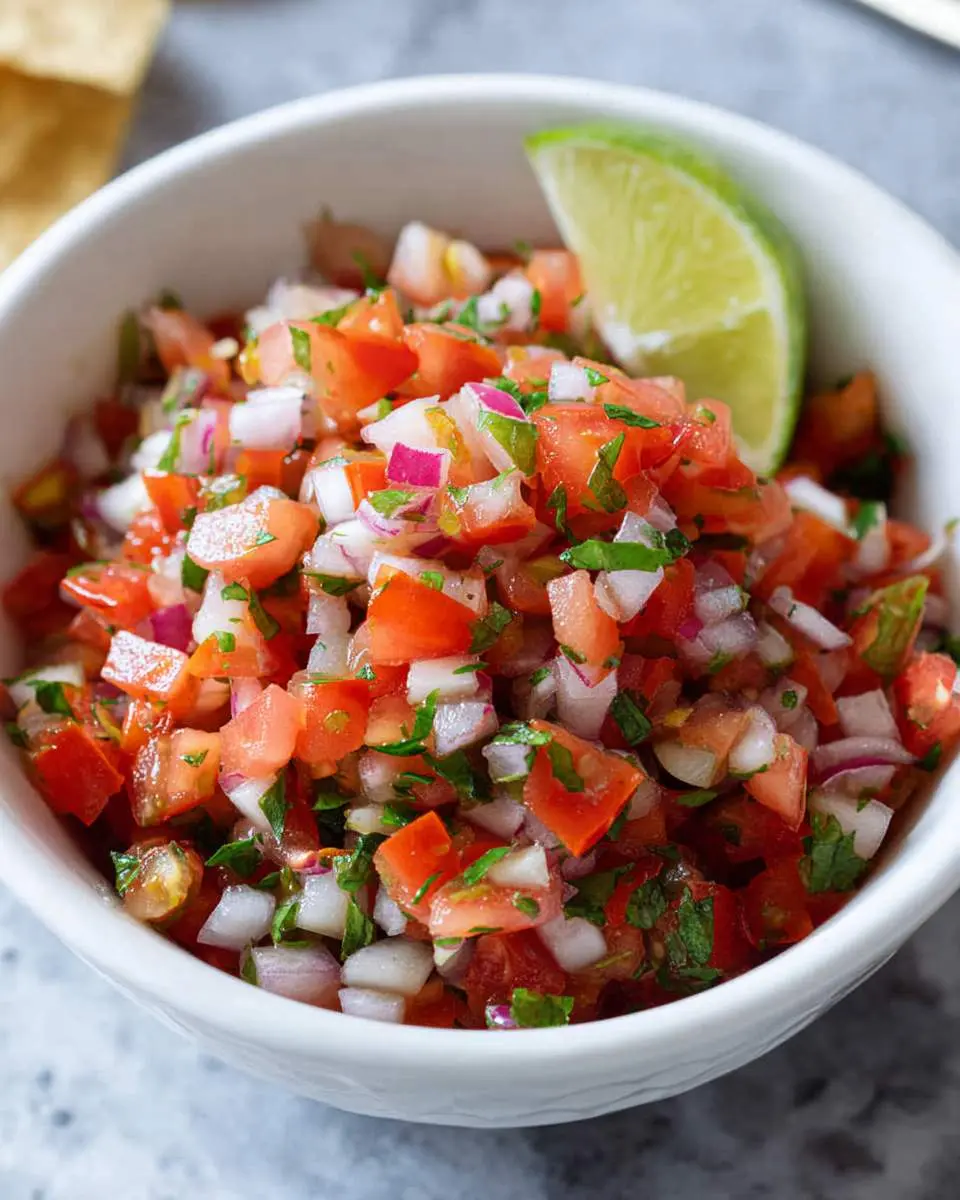
How to Make Pico de Gallo
I start by halving my tomatoes and gently squeezing out the seed jelly. this step changed everything for me. The chopping rhythm becomes meditative: small dice, uniform but not perfect, because hand-chopped beats food processor every time. I can hear the difference when my knife hits the board, that crisp thwack instead of the wet squish of over-processed salsa.
The onions go in next, and I let them sit with the lime juice while I finish everything else. That brief acid bath mellows their harshness without killing their personality. When I fold in the cilantro, the whole bowl suddenly smells like summer. I taste, adjust salt, taste again. This process reminds me of making mango salsa. same attention to balance, different fruit.
What I Learned From Three Batches in One Weekend
My Secret Trick: I salt my tomatoes and let them drain in a colander for fifteen minutes before mixing. This prevents the dreaded pool of liquid that ruins good chips.
I also stopped refrigerating my pico de gallo immediately. Room temperature for thirty minutes lets the flavors actually marry. cold mutes everything, including the pico de gallo I worked hard to brighten.
Lime juice quantity matters more than I thought. One lime versus two completely changes the preservation and punch. I juice fresh every time; the bottled stuff tastes flat and metallic to me now.
Finally, I taste with the chips I plan to serve. Salty chips need less salt in the salsa; unsalted ones need more. This sounds obvious, but I ignored it for years.
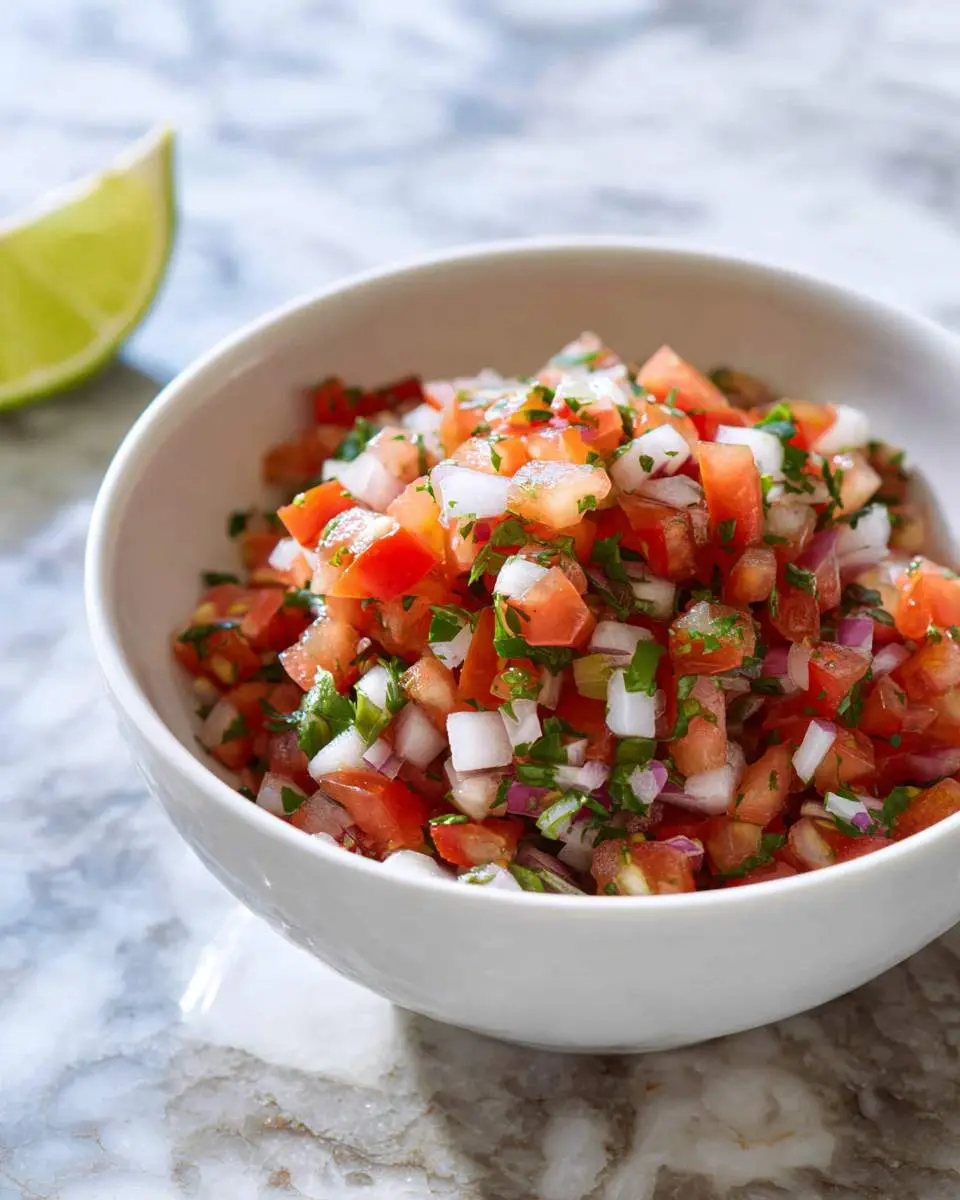
How to Store Pico de Gallo
- Refrigerate in an airtight glass container for up to 3 days. plastic absorbs the onion and cilantro odors permanently
- Store at 40°F or below, and place a paper towel on top of the salsa before sealing to absorb excess moisture
- Freezing is not recommended; the texture becomes mushy and water separates upon thawing
- If liquid pools during storage, drain it off and refresh with a squeeze of fresh lime juice and pinch of salt before serving
- Do not leave at room temperature for more than 2 hours total, including the initial resting period
Why This Belongs in a Light Eating Rotation
Tomatoes bring lycopene and actual hydration to the table, while raw onion delivers quercetin that cooking would diminish. A half-cup serving of this pico de gallo contains roughly 25 calories but enough flavor to rescue plain grilled chicken or beans. I reach for it when I want satisfaction without heaviness. the kind of clean eating that doesn’t feel like punishment.
FAQs
Why does my pico de gallo get watery overnight?
Salt draws moisture from tomatoes through osmosis. Even without salting, tomatoes continue releasing liquid after cutting. My draining method before mixing helps, but some separation is normal. Just pour off the liquid and refresh with lime before serving. the flavor remains intact.
Can I make this without cilantro?
Technically yes, though it becomes a different dish entirely. Some people substitute flat-leaf parsley for a milder green note, or add extra green onion tops. I respect the cilantro aversion. genetics make it taste like soap for some. but the traditional profile really depends on that particular herb.
How fine should I chop everything?
Aim for quarter-inch dice on tomatoes and onions. Too large and it falls off chips; too small and you lose texture distinction. I think of it as creating tiny flavor packets that explode together. Your knife skills improve noticeably after making this weekly for a summer.
Is pico de gallo the same as salsa?
Pico de gallo is actually a type of salsa. specifically salsa fresca or raw salsa. Unlike blended or cooked salsas, pico maintains distinct chunks of each ingredient. The name supposedly comes from eating it finger-to-mouth like a rooster’s pecking, though I’ve never confirmed this with a reliable source.

Pico de Gallo
Ingredients
Equipment
Method
Notes
Conclusion
This pico de gallo has become my summer signature, the dish friends request before they even walk through the door. Start with good tomatoes, chop with intention, and taste constantly. the rest takes care of itself. For creamy contrast, try it alongside this creamy cilantro garlic sauce at your next gathering.
Follow us on Social Media : Pinterest